
How To Clean Partial Dentures

To clean partial dentures, remove them from your mouth, rinse away loose food, brush every surface gently with a soft denture brush and a non-abrasive denture cleanser, then soak them overnight in water or a cleaning solution that is safe for your type of partial. Rinse well before putting them back in, and brush and floss your natural teeth carefully, especially those that hold the clasps. This simple routine takes only a few minutes and keeps your partial fresh, comfortable, and long-lasting. If you are unsure which products suit your partial, the team at a trusted dental clinic in Tillsonburg can recommend the right routine.
Rinse after meals. Brush once or twice a day with a soft brush and non-abrasive cleanser. Soak overnight in a solution suited to your partial. Avoid toothpaste, bleach, and hot water. Clean your natural teeth and gums thoroughly.
Keeping your partial clean protects your investment in restorative dental care, and it also protects the natural teeth and gums that support the partial.
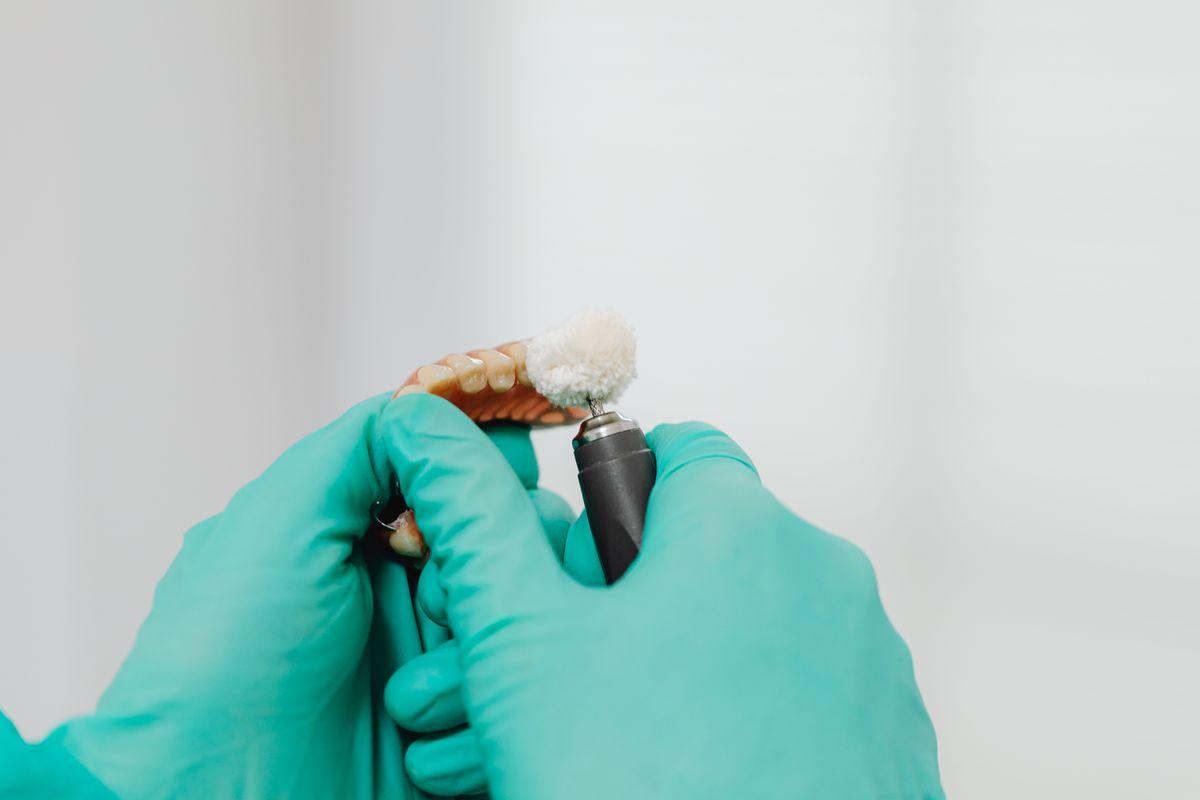
Professional cleaning and polishing during regular checkups is part of the clinic’s preventive services, removing stubborn stains and hardened deposits.
If your partial has stains that will not come off, rough areas, or an odour that persists despite cleaning, it is a good idea to book a checkup so it can be assessed.
Why Cleaning Partial Dentures Matters
Partial dentures collect plaque in much the same way as natural teeth. Plaque is a sticky film of bacteria that forms constantly. On a partial, it builds up on the acrylic base, around the replacement teeth, and especially around clasps and connectors. If it is not removed, it can lead to bad breath, staining, and irritation of the gums under the partial. More importantly, the bacteria on an unclean partial can increase the risk of decay and gum disease on the natural teeth the partial touches. Keeping the partial clean is one of the best ways to protect your remaining teeth.
Step-by-Step Daily Cleaning Routine
- Prepare your sink. Fill the basin with a little water or lay a folded towel in it, so the partial does not break if dropped.
- Remove the partial carefully. Use your fingertips under the clasps on both sides rather than pulling on one clasp.
- Rinse. Run cool or lukewarm water over the partial to remove loose food.
- Brush gently. Use a soft denture brush and a non-abrasive cleanser on all surfaces, including the inside, clasps, and connectors.
- Rinse again. Remove all cleanser before soaking or wearing.
- Soak overnight. Place the partial in water or a soaking solution recommended for your type of partial.
- Rinse in the morning. Always rinse soaking solution off before inserting the partial.
Cleaning Different Types of Partials
| Partial type | Cleaning tips | Avoid |
|---|---|---|
| Cast metal partial | Brush metal and acrylic parts gently; use cleansers labelled safe for metal | Bleach and some soaking tablets that can tarnish or corrode metal |
| Acrylic partial | Brush with a soft brush; soak in water or denture solution | Hot water, which can warp acrylic |
| Flexible partial | Use cleansers recommended for flexible materials; brush gently | Abrasive products and harsh soaking agents that can roughen or discolour the material |
Caring for the Teeth That Hold Your Partial
The natural teeth that support your partial need extra attention. Clasps rest against them, which makes it easier for plaque to gather in those areas. Brush these teeth carefully with a soft toothbrush and fluoride toothpaste twice a day, angling the bristles toward the gumline. Floss or use interdental brushes between teeth every day. Your dentist may suggest a fluoride rinse or high-fluoride toothpaste if you are at higher risk of cavities. Clean your gums, tongue, and the roof of your mouth too, especially in areas covered by the partial.
What Not to Use on Partial Dentures
Regular toothpaste
Too abrasive for acrylic and flexible materials. It creates scratches that trap stains.
Bleach
Can weaken acrylic, discolour pink areas, and corrode metal frameworks.
Hot or boiling water
Can warp the partial and ruin the fit.
Hard brushes
Can scratch surfaces and bend clasps.
Household cleaners
Not designed for the mouth and may leave harmful residues.
Whitening products
Do not whiten acrylic teeth and may damage the surface.
Myths About Cleaning Partial Dentures
Removing Stains and Tartar Safely
Over time, partial dentures can pick up stains from coffee, tea, red wine, and certain foods, and minerals in saliva can harden plaque into tartar, especially on the inside surfaces near the lower front teeth. Daily brushing and overnight soaking prevent most build-up. If stains appear, an approved denture cleanser used as directed can help. For stubborn tartar or discolouration, a professional cleaning is the safest option. Dental teams can use ultrasonic cleaners and polishing techniques that remove deposits without damaging the partial. Avoid scraping tartar with sharp tools at home, which can scratch acrylic and damage clasps.
Cleaning Your Partial When You Are Away From Home
Travel, work, and busy days can make your usual routine harder, but a few simple steps keep your partial clean on the go.
- Carry a small case, a travel-size denture brush, and a small bottle of cleanser
- Rinse your partial and your mouth with water after meals if you cannot brush
- Never wrap your partial in a napkin, where it is easily thrown away
- Keep it in its case rather than in a pocket or bag where it could bend
- Resume your full cleaning routine as soon as you can
Cleaning Around Clasps and Connectors
Clasps and connectors are some of the hardest areas to clean. Plaque gathers on their inner surfaces, where they touch your teeth. Use the narrow end of a denture brush or a small interdental brush to reach these areas. Clean gently to avoid bending the clasps. For metal partials, take care not to bend the framework while holding it. If you find a clasp that feels loose or out of shape, do not try to bend it back yourself, as this can weaken it.
A Weekly Deep-Clean Routine
- Inspect your partial. Look for cracks, chips, rough areas, or bent clasps under good light.
- Brush thoroughly. Spend extra time on clasps, connectors, and the fitting surface.
- Use a recommended soak. Follow product instructions carefully, especially for metal or flexible partials.
- Clean the storage case. Wash it with warm soapy water and let it air dry.
- Replace your brush regularly. Worn bristles are less effective and may harbour bacteria.
Signs Your Cleaning Routine Needs Help
- White, chalky, or hard deposits that do not brush off
- Persistent bad breath or a bad taste from the partial
- Redness or soreness on gums under the partial
- New cavities on teeth that hold the clasps
- Dull, rough, or scratched surfaces on the acrylic
If you notice any of these, a professional cleaning and review of your routine can quickly get things back on track.
Choosing the Right Cleaning Tools
Denture brush
Has a large head for broad surfaces and a narrow end for clasps and tight corners.
Non-abrasive cleanser
Liquid, foam, or paste designed for dentures, gentle on acrylic and metal.
Soaking container
A clean, covered case that keeps the partial moist and safe.
Interdental brushes
Help clean around clasps and between natural teeth.
Your dental team can recommend specific products that are safe for your partial’s materials. Using the right tools makes cleaning quicker and more effective, and helps your partial look and feel its best for years. A few minutes each day protects your smile, your gums, and the natural teeth that keep your partial secure.
Cleaning Tips for Caregivers
If you help a family member or someone in your care with their partial denture, gentle and consistent cleaning makes a big difference to their comfort and health. Ask them to remove the partial if they are able, or remove it carefully by holding the base rather than pulling on the clasps. Clean it over a basin of water, brush their natural teeth with a soft brush, and gently wipe their gums. Watch for sore spots, broken pieces, or changes in fit, and let their dental team know about any concerns at the next visit.
Trusted Care at the Best Dental Clinic in Tillsonburg
Known for a 5.0 Google rating and 252+ patient reviews, Family Dentistry on Brock is a trusted choice for families across Tillsonburg. The clinic accepts new patients and CDCP (Canadian Dental Care Plan) patients and offers dental implants, clear aligners, restorative care, veneers, laser treatment, teeth whitening, dental emergency care, sedation dentistry, dental surgery, and orthodontics.
Ready to take the next step?
Contact the clinic at +1 519-900-5640 or info@familydentistryonbrock.com, or come in to 49 Brock St E, Tillsonburg, ON N4G 1Z7. Monday hours extend to 7:00 PM, and Saturdays are available by appointment.
Frequently Asked Questions
How often should I clean my partial denture?
Rinse after meals and brush at least once a day, ideally before soaking it overnight.
Can I use toothpaste on my partial?
It is best to avoid regular toothpaste, as it can scratch the surface. Use a non-abrasive denture cleanser.
What should I soak my partial in?
Use water or a soaking solution recommended for your partial type, especially if it has metal parts.
Why does my partial smell even after cleaning?
Plaque, tartar, or small cracks may be trapping bacteria. A professional cleaning and check can help.
Should I clean my gums too?
Yes. Gently brush or wipe your gums, tongue, and palate daily to keep tissues healthy.
Conclusion
Cleaning partial dentures every day with a soft brush, a non-abrasive cleanser, and overnight soaking keeps them fresh and long-lasting. Caring for the natural teeth that support the partial is just as important. Regular professional checkups help remove stubborn deposits and catch small problems early.