Teeth whitening in Tillsonburg

Teeth Whitening in Tillsonburg: Safe, Professional Results

Teeth whitening in Tillsonburg uses dentist-supervised peroxide gels to lighten stains inside and on the surface of your enamel, usually by several shades. Yellowing from coffee, tea, wine and age is common and harmless, but a single dark tooth or sudden colour change can point to a problem worth checking at a dental office in Tillsonburg first.

Family Dentistry on Brock holds a 5.0 Google rating from 252+ patient reviews. We start every whitening plan with a quick exam, because whitening over a cavity or receding gums can hurt.

In-office and take-home optionsNew and CDCP patients welcomeMondays until 7 PMSaturdays by appointment
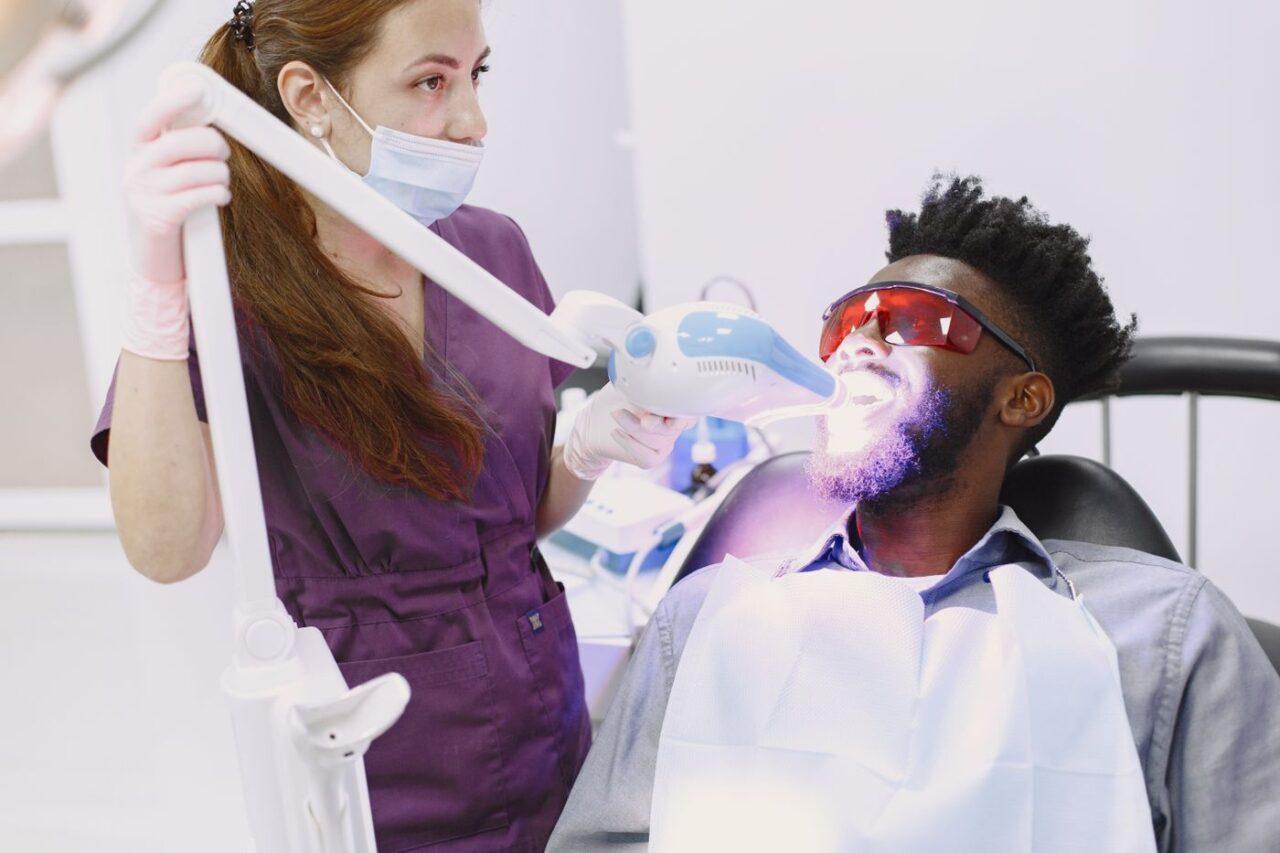
Professional teeth whitening in Tillsonburg at Family Dentistry on Brock
5.0 ★ Google ratingfrom 252+ patient reviews
What is professional teeth whitening?

Quick answer

Professional teeth whitening is a cosmetic treatment where a dentist applies, or supplies, a hydrogen peroxide or carbamide peroxide gel that breaks down stain molecules inside the enamel. It is stronger and better controlled than store-bought products, with protection for your gums and a plan to manage sensitivity.

Whitening only changes natural teeth. If old front fillings or crowns no longer match, our restorative care can replace them after whitening so everything blends.

Deep stains that won’t lift may suit dental veneers in Tillsonburg instead.

Crooked teeth? Many patients straighten with clear aligners first, then whiten at the end.

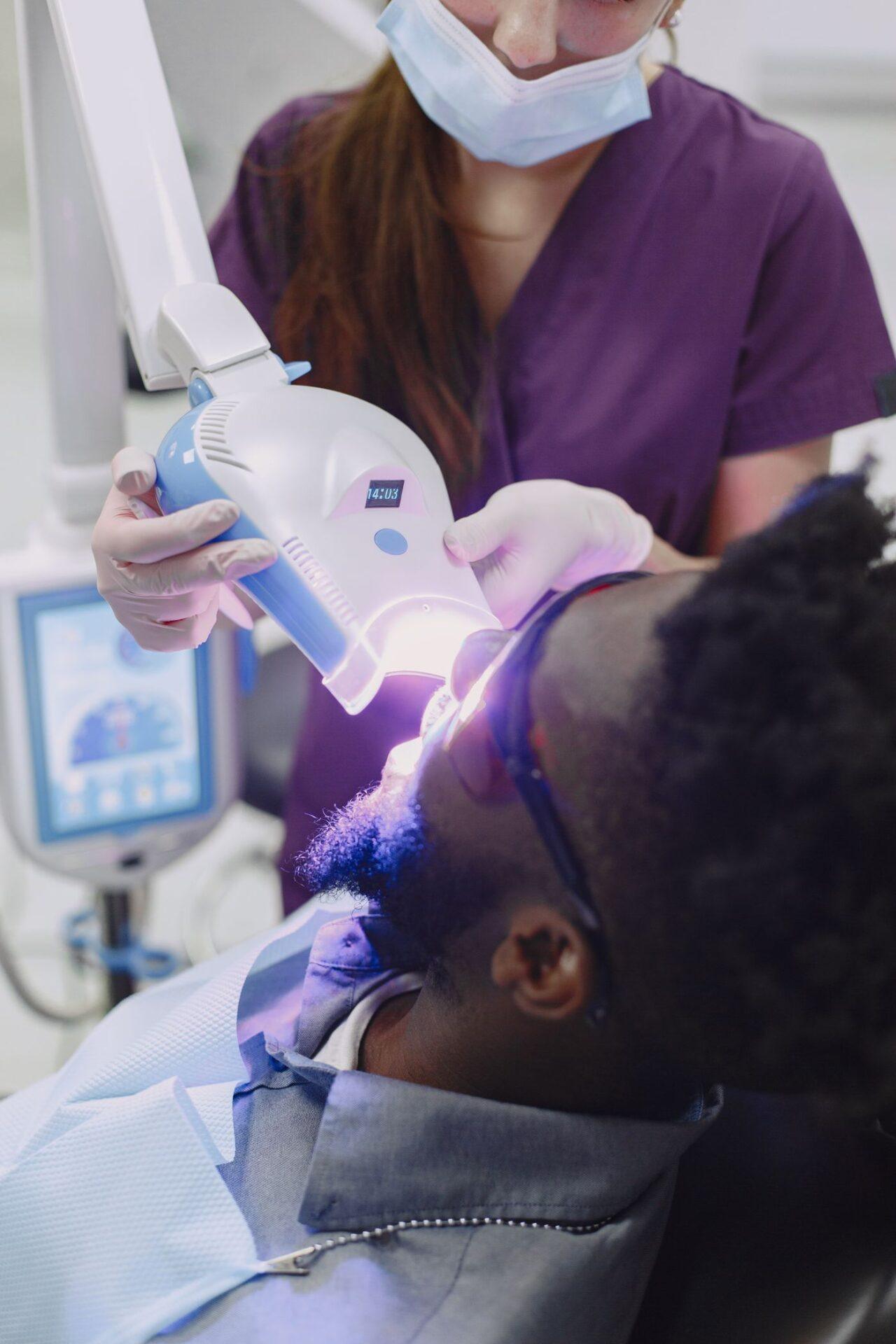
Some in-office systems use a light to speed things up. Ask about our laser treatment in Tillsonburg options during your consult.

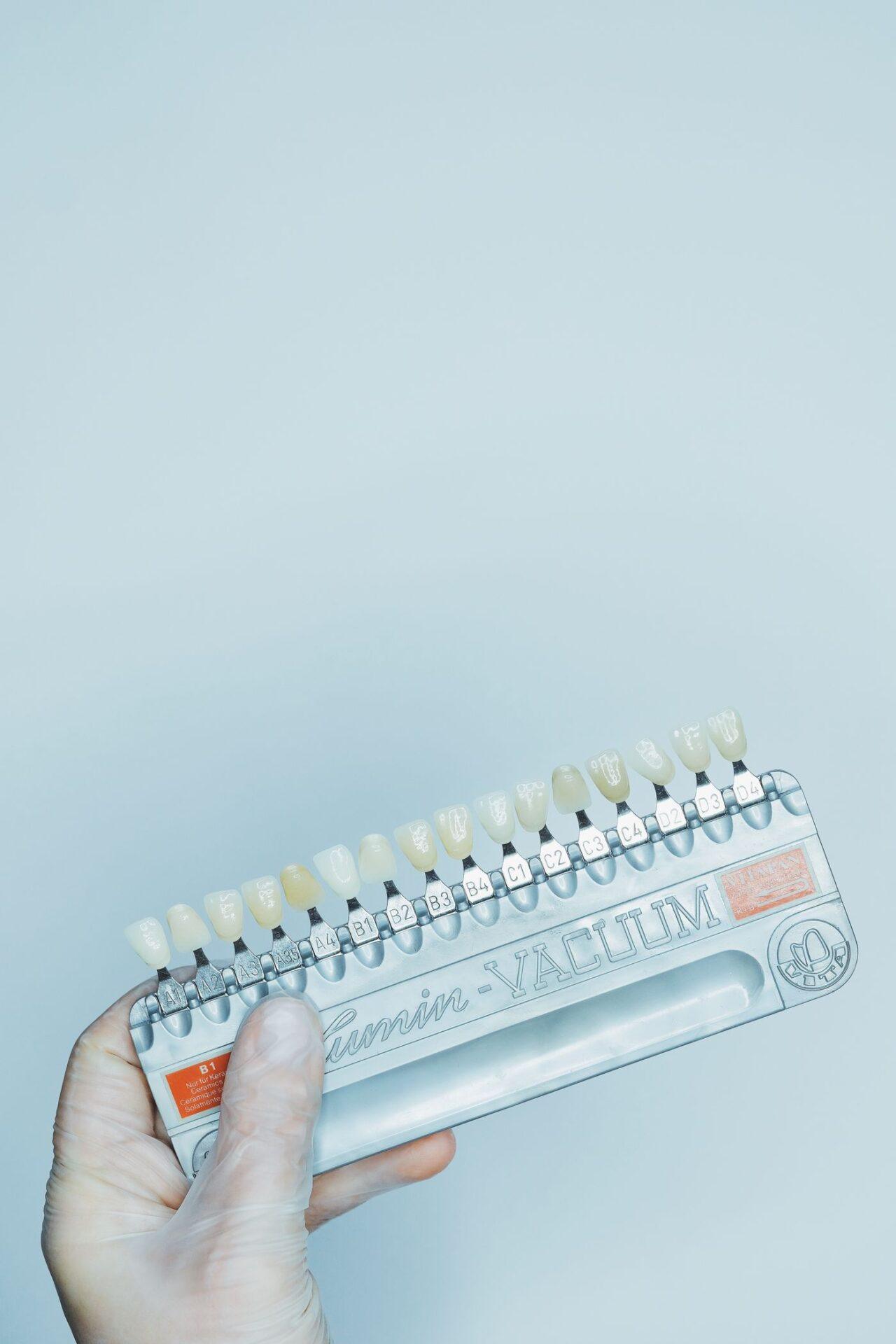
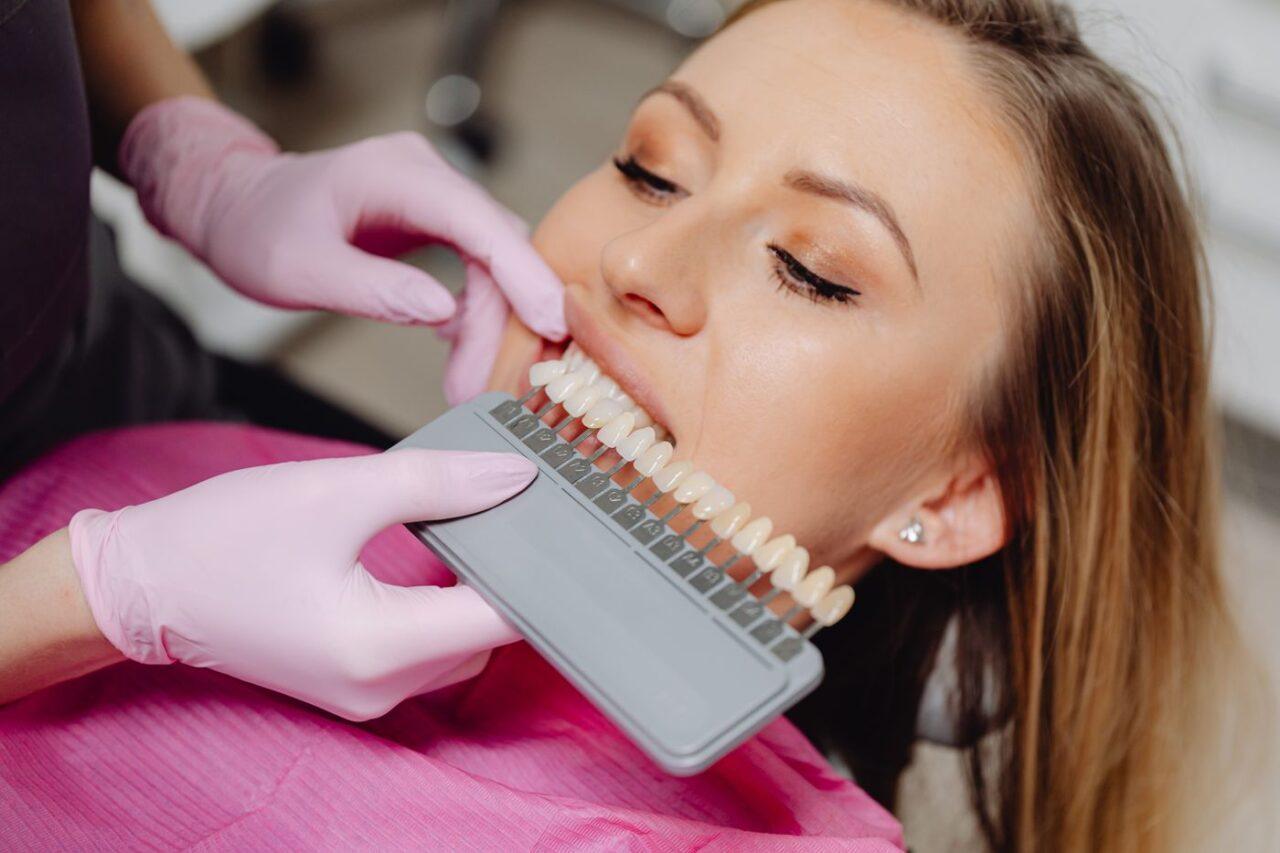
Dental shade guide used before teeth whitening in Tillsonburg

What causes teeth to turn yellow or stained?

Stains come in 2 kinds. Knowing which you have tells us how well whitening will work.

01

Coffee, tea and red wine

The classic surface stains. They respond very well to whitening.

02

Smoking and vaping

Tar and nicotine leave yellow to brown stains that build up over time.

03

Aging

Enamel thins and the yellower dentin underneath shows through.

04

Injury to a tooth

A knock can darken a single tooth from the inside. This needs an exam first.

05

Certain medications

Some antibiotics taken in childhood cause grey or banded stains that resist whitening.

06

Too much fluoride in childhood

White or brown spots called fluorosis. Whitening can make them less obvious, but not always gone.

Surface (extrinsic) stains lift most easily. Stains inside the tooth (intrinsic) take longer, and some respond better to veneers or bonding.

Why does one tooth look darker than the others?

Short answer

A single dark tooth is usually caused by an old injury, a nerve that has died, a leaking filling or decay. It is different from general yellowing and needs an exam and X-ray before any whitening.

When a nerve dies after a knock (sometimes years earlier), blood breakdown products stain the tooth from the inside. It often turns grey, brown or slightly pink.

Regular whitening gel on the outside won’t fix that. The tooth may need root canal treatment, then internal whitening, a veneer or a crown. So if one tooth stands out, book a check before buying any whitening product.

Which teeth whitening option is best for you?

Here's how the common options compare.

FactorIn-office whiteningCustom take-home traysStore-bought stripsWhitening toothpaste
StrengthHighest, professional strengthProfessional strength, lower than in-officeLowRemoves surface stain only
SpeedAbout 1 visitAbout 1 to 2 weeksSeveral weeksMonths, mild change
Gum protectionBarrier applied by the dental teamCustom-fit trays keep gel off gumsOne size fits allNot applicable
Sensitivity controlMonitored during treatmentAdjust wear time as neededHard to controlLow
Best forQuick results before an eventGradual, even results and touch-upsVery mild stainingKeeping results

Many patients do best with a combination: an in-office session for a jump start, then take-home trays for touch-ups.

Does the light in in-office whitening make a difference?

Some in-office systems use a light or laser to activate the gel. Research is mixed on how much the light adds by itself; the gel does most of the work.

What a light can do is shorten chair time and make results show up faster in one visit. It can also make teeth a bit more sensitive for a day or two, so we decide case by case.

Either way, the shade after 1 or 2 weeks matters more than the shade the minute you leave. Teeth are slightly dehydrated right after whitening and settle a little over the next few days.

What happens during in-office teeth whitening?

A typical appointment takes about 60 to 90 minutes.

  1. Exam and shade check

    We look for cavities, cracks or gum recession and record your starting shade.

  2. Cleaning and prep

    Teeth are polished so the gel reaches the enamel evenly.

  3. Gum protection

    A protective barrier covers your gums and lips.

  4. Whitening gel

    Professional gel is applied in short cycles, sometimes with a light.

  5. Rinse and new shade

    We compare your new shade to the starting one.

  6. Aftercare plan

    You get sensitivity tips and a 48-hour "white diet" list.

How do take-home whitening trays work?

Custom trays are made from a scan or impression of your teeth, so they fit snugly and hold the gel against the enamel without leaking onto the gums.

  1. We take records of your teeth and make your trays.
  2. You get professional gel and clear instructions on how much to use.
  3. You wear the trays for a set time each day, often 30 minutes to a few hours, or overnight with some gels.
  4. Most people see their final shade within about 1 to 2 weeks.
  5. Keep the trays. A few touch-up days every so often maintain the result.

Trays suit people who’d rather whiten gradually, or who have sensitive teeth and want to control the pace.

In-office teeth whitening treatment with a curing light in Tillsonburg

Who is a good candidate for teeth whitening?

Short answer

Adults and older teens with healthy teeth and gums, and yellowish surface or age-related stains, usually get the best results. Cavities, gum disease and cracked teeth should be treated before whitening.

Who should wait or choose another option

  • Pregnant or breastfeeding patients (whitening is usually postponed as a precaution)
  • Children and younger teens, whose teeth are still developing
  • People with untreated cavities, exposed roots or severe sensitivity
  • Anyone whose front teeth are mostly crowns, veneers or large fillings
  • Grey or banded medication stains, which often respond better to veneers

Every plan is reviewed by dentists registered with the Royal College of Dental Surgeons of Ontario (RCDSO). If whitening isn’t the right fit, we’ll tell you what is.

Is teeth whitening safe?

Quick answer

Yes, when it is done under a dentist's supervision. The most common side effects are temporary tooth sensitivity and mild gum irritation, which usually fade within 1 to 3 days. Whitening does not damage healthy enamel when used as directed.

Managing sensitivity

  • Brush with a sensitivity toothpaste for 1 to 2 weeks before and during whitening
  • Shorten tray wear time or skip a day if teeth feel zingy
  • Avoid very hot or cold drinks for 24 to 48 hours
  • Ask us about desensitizing gel

Safety warning

Overusing high-strength products, or using gels not meant for home use, can burn gums and cause severe sensitivity. If you have pain that lasts more than a few days, stop and call us.

Can you whiten sensitive teeth?

Usually, yes. It just needs a gentler plan.

  • Start sensitivity toothpaste 2 weeks before whitening
  • Choose take-home trays with a lower-strength gel and shorter wear times
  • Whiten every other day instead of daily
  • Use a desensitizing gel in the trays between sessions

If sensitivity comes from exposed roots or worn enamel, we treat that first. Whitening gel on exposed root surfaces can sting and won’t lighten them anyway.

What are the common teeth whitening myths?

Plenty of whitening advice online does more harm than good.

Myth

Whitening damages enamel.

Fact

Professional whitening used as directed does not damage healthy enamel. Sensitivity is temporary.

Myth

Charcoal toothpaste whitens teeth safely.

Fact

Charcoal is abrasive. It can scratch enamel and make teeth look more yellow over time.

Myth

Whitening works on crowns and fillings.

Fact

Only natural teeth lighten. Old restorations may need replacing to match.

Myth

Results last forever.

Fact

Results usually last from several months to a few years, depending on coffee, tea, wine and smoking habits.

Myth

Lemon juice or baking soda is a natural fix.

Fact

Acid and abrasives wear enamel. Damaged enamel can look darker and more sensitive.

What do real teeth whitening results look like?

Typical situations in our Tillsonburg office, with details changed for privacy.

Adult, age 29

Coffee stains before a wedding

An in-office session 3 weeks before the day, plus take-home trays for a final touch-up the week of.

Adult, age 52

Yellowing from age and tea

Take-home trays over 2 weeks gave a steady, natural-looking change without much sensitivity.

Adult, age 41

One front tooth darker than the rest

An X-ray showed the nerve had died after an old injury. The tooth needed a root canal before internal whitening.

Adult, age 35

Old front fillings that no longer matched

Whitening came first, then the fillings were replaced to match the new shade.

How do you prepare for professional teeth whitening?

  1. Book a checkup and cleaning so the gel reaches clean enamel.
  2. Get any cavities or cracks fixed first.
  3. Start a sensitivity toothpaste 1 to 2 weeks before.
  4. Plan the timing: whiten at least 2 weeks before a big event.
  5. If you plan new crowns or fillings on front teeth, whiten first so they can be matched to your new shade.

How long do teeth whitening results last?

Short answer

Most people keep their results for about 6 months to 3 years. Coffee, tea, red wine, dark sauces and smoking shorten that time, while good home care and occasional touch-ups extend it.

The 48-hour white diet

Right after whitening, enamel picks up stains more easily. For 2 days, stick to light-coloured foods.

  • Good: chicken, fish, rice, pasta with white sauce, potatoes, bananas, milk, water
  • Avoid: coffee, tea, red wine, cola, berries, soy sauce, tomato sauce, curry, smoking
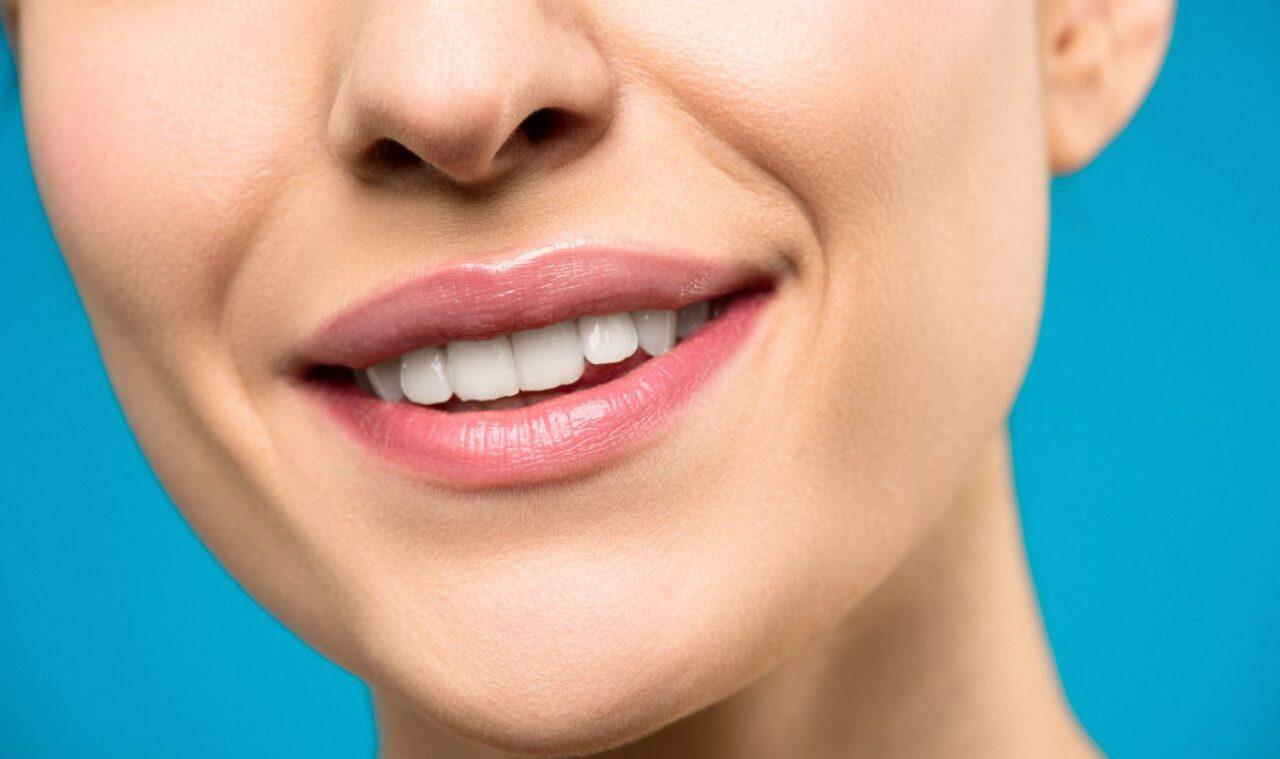
Bright smile after professional teeth whitening in Tillsonburg

Which foods and drinks stain teeth the most?

Dark colour plus acid is the worst combination. Here's a rough guide.

ItemStaining levelTip
Black coffee and espressoHighAdd milk, sip with a straw, rinse with water
Black teaHighGreen or herbal tea stains less
Red wineHighEat cheese or drink water alongside
Cola and dark popHigh, plus acidLimit to meals and don't brush right after
Berries and berry juiceMedium to highRinse with water afterward
Soy sauce, curry, tomato sauceMediumPair with crunchy vegetables
Smoking and vapingVery highQuitting helps whitening last much longer

How can you keep your teeth white longer?

Small habits make a big difference to how long results last.

01

Drink dark drinks through a straw

Less contact with the front teeth means fewer stains.

02

Rinse with water after coffee or wine

A quick swish clears pigment before it settles.

03

Keep cleanings on schedule

Professional polishing removes surface stain every 6 months.

04

Use a regular fluoride toothpaste

Stronger enamel resists staining better.

05

Quit smoking or vaping

The single biggest cause of fast re-staining.

06

Book touch-ups

A few days with your trays every 6 to 12 months keeps the shade bright.

Is whitening toothpaste worth using?

Whitening toothpaste removes surface stains with mild polishing agents. It won’t change the natural colour of your teeth the way peroxide gel does.

It’s a good maintenance tool after professional whitening, used once a day alongside a regular fluoride toothpaste. Pick one with a low abrasion level, and skip charcoal formulas, which can scratch enamel over time.

How often can you safely whiten your teeth?

A full whitening course is usually done once, then maintained with short touch-ups. For most people, that means 1 to 3 days with take-home trays every 6 to 12 months.

Whitening more often than that rarely makes teeth any whiter. Every tooth has a natural limit, and pushing past it mostly brings sensitivity. If your teeth look translucent or bluish at the edges, it’s time to stop and let us check them.

Keep your trays in their case and bring them to your cleaning visits so we can check the fit as your teeth and gums change.

Teeth whitening vs veneers vs bonding: what's the difference?

Whitening changes colour. The other 2 change shape and colour.

FactorTeeth whiteningDental bondingDental veneers
What it changesColour of natural teethSmall chips, gaps and shapeColour, shape and length
Tooth reshapingNoneLittle or noneSmall amount of enamel
Visits1 visit or 1 to 2 weeks at homeUsually 1 visitUsually 2 or more
LifespanMonths to a few yearsAbout 5 to 10 yearsAbout 10 to 15+ years
Best forYellowing and surface stainsMinor fixes on a few teethDeep stains and bigger cosmetic changes

What is internal whitening for a root canal treated tooth?

Internal whitening lightens a tooth from the inside. After root canal treatment, the dentist places a whitening agent inside the tooth, seals it, and replaces it over a few visits until the shade matches the teeth beside it.

  • Works well for teeth darkened after nerve damage
  • Keeps the natural tooth with no reshaping of the outside
  • Usually takes 1 to 3 short visits

It’s only done on teeth with a sound root canal filling, so an X-ray comes first.

Can teenagers whiten their teeth?

Older teens can whiten safely once their adult teeth have fully developed, usually around 16 and up, and only after a dental exam.

Younger teens have larger nerve chambers, which makes sensitivity more likely. For them, a professional cleaning and good habits often brighten things enough. Kids should never use adult whitening strips without a dentist’s advice.

Should you whiten after braces or clear aligners?

It’s the ideal time. Once your teeth are straight, light reflects more evenly and whitening looks better.

With clear aligners, your final trays can sometimes double as whitening trays. With braces, wait a couple of weeks after removal so any spots around old bracket areas can be checked first. White marks from decalcification need a different treatment, and whitening can make them stand out more for a short time.

Tooth shade check for teeth whitening at a Tillsonburg dental clinic

What affects the cost of teeth whitening in Tillsonburg?

Short answer

Whitening cost depends on the method (in-office, take-home trays or both), how many sessions you need and whether other dental work is needed first. We explain your options and give you an estimate at your consultation.

Is whitening covered by insurance or CDCP?

Teeth whitening is cosmetic, so most dental plans don’t cover it, and the Canadian Dental Care Plan doesn’t either. CDCP can still help with the exam and cleaning that should come before whitening.

Why professional whitening is good value

Custom trays last for years and only need fresh gel for touch-ups. Store-bought strips are cheaper per box, but people often go through many boxes chasing a result that trays deliver in 2 weeks.

What mistakes do people make with DIY whitening?

  • Brushing with charcoal or baking soda every day. Abrasion wears enamel and makes teeth look more yellow.
  • Using lemon, vinegar or strawberries. Acid softens enamel.
  • Leaving strips on longer than directed. More time doesn’t mean whiter, just more sensitivity.
  • Whitening over a cavity or cracked tooth. Gel can reach the nerve and cause sharp pain.
  • Buying unregulated gels online. Strength and ingredients may not match the label.
  • Expecting crowns and fillings to change. They stay the same colour.

A quick exam before whitening avoids nearly all of these.

Can coffee drinkers keep their teeth white?

Yes. A simple routine keeps teeth bright and lets you keep your morning cup.

  1. Whiten professionally once to set your new baseline shade.
  2. Drink coffee within a set time rather than sipping it all morning.
  3. Rinse with water right after, then wait 30 minutes before brushing.
  4. Use a low-abrasion whitening toothpaste once a day.
  5. Do 1 to 3 touch-up days with your trays every few months.

Plenty of our Tillsonburg patients follow this routine and keep a bright smile while still enjoying 2 coffees a day. Tea and red wine drinkers can use the same approach.

Thinking about a brighter smile?

Call our dental office in Tillsonburg at +1 519-900-5640 or email info@familydentistryonbrock.com. We'll reply quickly and help you choose between in-office and take-home whitening.

Why choose Family Dentistry on Brock for teeth whitening?

Looking for a cosmetic dentist in Tillsonburg who’ll give you an honest answer about what whitening can and can’t do? Family Dentistry on Brock holds a 5.0 Google rating from 252+ patient reviews, and patients often tell friends we’re the best dentist in Tillsonburg for explaining their options.

  • Safe, supervised whitening. Every plan is checked by RCDSO-registered dentists.
  • One clinic for everything. Dental implants, clear aligners, restorative care, dental veneers, laser treatment, teeth whitening, dental emergency care, sedation dentistry, dental surgery and orthodontics.
  • New and CDCP patients welcome. CDCP covers eligible exams and cleanings.
  • Extended hours. Monday until 7:00 PM and Saturday by appointment.
  • Easy to reach. 49 Brock St E, Tillsonburg, ON N4G 1Z7.

Families also see us as their family dentist in Tillsonburg, and if a tooth breaks we work as an emergency dental clinic in Tillsonburg too.

Teeth whitening in Tillsonburg: frequently asked questions

How many shades whiter will my teeth get?

Most people see a noticeable change of several shades, but results vary with the type of stain and your natural tooth colour. Yellowish surface stains usually lighten the most.

Does teeth whitening hurt?

Whitening is not painful, but temporary sensitivity or mild gum irritation is common for 1 to 3 days. Sensitivity toothpaste and shorter wear times help.

How long does professional whitening last?

Results usually last from about 6 months to 3 years. Avoiding stain-causing drinks and doing occasional touch-ups with take-home trays helps them last longer.

Can I whiten my teeth if I have crowns or fillings?

Yes, but only your natural teeth will lighten. Crowns, veneers and fillings keep their colour, so visible front restorations may need replacing afterward to match.

Is in-office or take-home whitening better?

In-office whitening is fastest and good before an event. Take-home trays give gradual, even results and make touch-ups easy. Many people combine both.

Conclusion

Professional teeth whitening is a safe, effective way to lift coffee, tea and age-related stains when it is planned around healthy teeth and gums. A quick exam first, the right method for your stains and a little aftercare make results brighter and longer lasting. Family Dentistry on Brock is ready to help you choose the whitening option that fits your smile and your schedule.

Results vary depending on the type of stain and your natural tooth colour. This page is general information and does not replace an in-person dental assessment.