Root Canal Healing Time

Recovering from a root canal procedure is a common concern for many patients. Understanding the healing time and post-treatment care is essential for a smooth recovery.
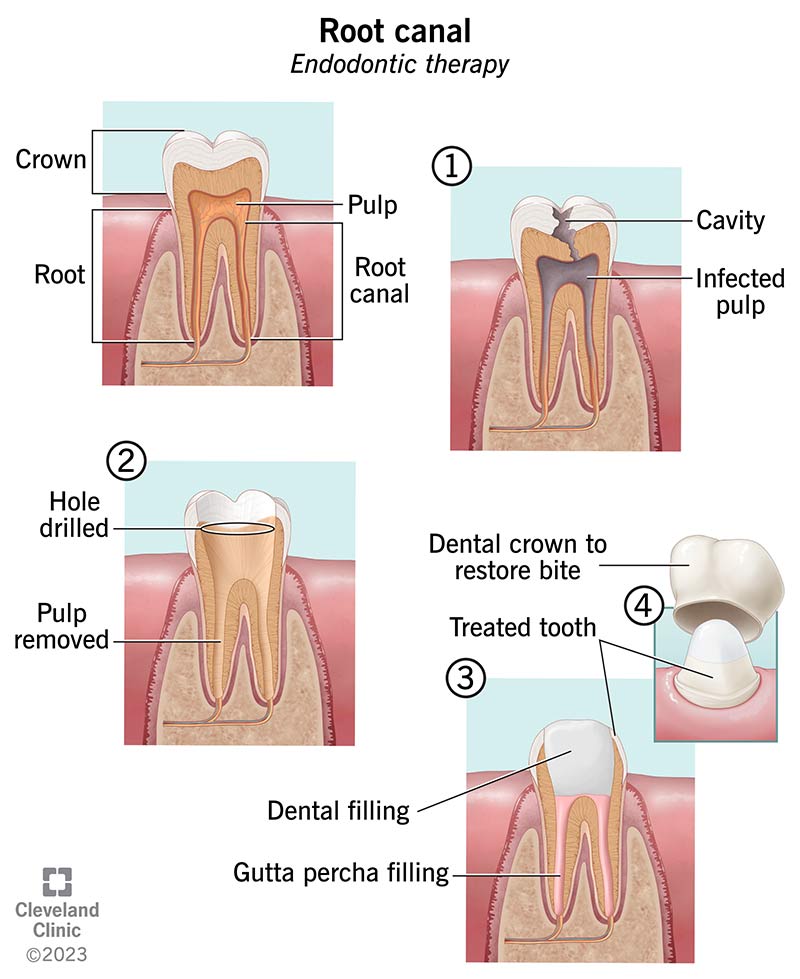
Credit: my.clevelandclinic.org
Frequently Asked Questions For Root Canal Healing Time
How Long Does It Take To Recover From A Root Canal?
Recovery from a root canal typically takes less than a week. Most patients heal within a few days, but in some cases, it may take one to two weeks, especially if there are complications. If pain or swelling persists beyond what pain medication can relieve, it is important to seek treatment from the dentist or a doctor.
Follow post-treatment care instructions and avoid putting unnecessary strain on the treated tooth.
How Long Is The Pain After A Root Canal?
The pain after a root canal typically lasts a few days, but in some cases, it may take one to two weeks to fully recover. If the pain persists or if there is swelling that cannot be relieved by pain medication, it is important to seek further treatment from a dentist or doctor.
Following proper aftercare instructions and avoiding activities that strain the treated tooth can help promote healing.
What Should You Not Do After A Root Canal?
After a root canal, avoid chewing on hard foods or heavy biting until cleared by your dentist. Refrain from chewing, drinking hot or cold liquids, or smoking for the first hour. Smoking can interfere with healing. Follow dentist’s instructions for a quick recovery, usually within one to two weeks.
How Do I Know If My Root Canal Is Healing?
Most patients recover after a few days from a root canal. In some cases, it may take one to two weeks for complete healing. Any persistent pain or swelling should prompt a visit to the dentist for further evaluation and treatment.
How a root canal heals
General dentist registered with the Royal College of Dental Surgeons of Ontario (RCDSO), practising at Family Dentistry on Brock, Tillsonburg. Last reviewed November 2026. This guide is general information and does not replace an exam with your own dentist.
Healing stages after a root canal
| Stage | Timeframe | What is happening |
|---|---|---|
| Immediate | 0 to 3 days | Inflammation around the root, tenderness |
| Short term | 1 to 2 weeks | Ligament settles, biting feels normal |
| Medium term | 1 to 6 months | New bone starts filling the infected area |
| Long term | 6 to 24 months | Bone remodels, X-ray dark area shrinks |
What helps healing
- Placing the crown or final filling promptly to seal the tooth.
- Not chewing hard foods on the tooth until it is restored.
- Keeping the area clean with gentle brushing and flossing.
- Avoiding smoking, which slows bone healing.
- Returning for follow-up X-rays when advised.
Factors that can slow healing
Large infection
A big area of bone loss takes longer to fill in.
Smoking
Reduces blood flow to healing tissues.
Diabetes
Uncontrolled blood sugar can slow repair.
Leaking restoration
Bacteria re-entering the canals delay healing.
Cracks
A hidden crack can prevent full healing.
How will I know my root canal has healed?
Comfort is the first sign: no pain, no swelling and normal chewing. The second is the X-ray, where the dark area at the root tip becomes smaller or disappears over months.
What if the X-ray does not show healing?
Sometimes healing is simply slow. If the area grows or symptoms return, options include retreatment, a small surgery at the root tip called an apicoectomy, or extraction.
Is it normal for the tooth to feel slightly different?
Yes. A treated tooth no longer has a nerve, so it does not feel hot or cold, but it can still feel pressure through the surrounding ligament.
Caring for your tooth while it heals
- Chew on the other side until the tooth is restored
- Take pain relief as directed in the first days
- Rinse gently with warm salt water if the gum is sore
- Call if pain increases or swelling appears
How follow-up X-rays show healing
Before treatment, an infected tooth often shows a dark area around the tip of the root on an X-ray. This dark shadow is where bone has been lost to infection. After a root canal, the source of the infection is removed and sealed, and the body slowly rebuilds bone in that space. On follow-up X-rays taken several months to a year later, the dark area should look smaller, less defined or gone completely. We compare the new image with the original to judge progress. Small areas often heal within six months, while larger ones can take a year or more. If an area stays the same size but you have no symptoms, we may simply keep monitoring it. If it grows, or if you develop pain, swelling or a gum pimple, further treatment may be needed.
Living normally while the bone heals
You do not need to wait for bone healing to finish before living normally. Once the tooth is restored with a crown or permanent filling and any tenderness has passed, you can eat, brush and floss as usual. The healing happens quietly in the background. The most helpful things you can do are to keep the tooth clean, avoid smoking, manage health conditions such as diabetes, protect the tooth from heavy grinding with a night guard if needed, and attend your follow-up visits so we can confirm the bone has healed.
Signs your root canal is healing well
These signs usually show the treatment is working.
- Biting tenderness fades within one to two weeks
- No swelling or gum pimple near the tooth
- The tooth feels normal when you chew
- Follow-up X-rays show the dark area shrinking
Does a root canal heal faster in younger people?
Healing can be quicker in younger, healthy patients, but most adults heal well when the tooth is properly sealed and restored.
Can I exercise while the tooth heals?
Yes. Light exercise is fine the next day, and normal activity once you feel comfortable. Healing of the bone continues quietly in the background and does not limit your daily life.
When healing takes longer than expected
Most root canal teeth heal well, but sometimes the process is slower. Large areas of infection, cysts at the root tip, very curved or narrow canals and teeth that had a previous root canal can all take longer. General health also plays a part: smoking, uncontrolled diabetes and some medications can slow the body’s ability to rebuild bone.
If a follow-up X-ray shows only partial healing, the usual first step is to wait and recheck, because bone can take a long time to fill in. If there are symptoms, or the area is clearly getting larger, we look for the reason. A cracked tooth, a missed canal or a leaking restoration are common causes. Depending on what is found, the options include retreating the root canal, a small surgery at the root tip to seal it directly, or, if the tooth cannot be saved, removing it and planning a replacement.
The good news is that a slow-healing tooth is not usually a sign that something was done wrong. Each person and each tooth heals at its own pace, and careful follow-up makes sure any problem is caught early.
Will I feel anything while the bone heals?
Usually not. Bone healing happens without symptoms once the early tenderness has passed.
Can a healed root canal become infected again?
It can, if bacteria re-enter through a crack or leaking filling, which is why a good restoration and regular checkups matter.
Does a crown help the bone heal?
Indirectly, yes. A well-fitting crown or permanent filling seals the top of the tooth so bacteria cannot re-enter the cleaned canals. Keeping bacteria out gives the bone around the root ideal conditions to rebuild over the following months.
Should I avoid hard foods while the bone heals?
Once the tooth is restored and comfortable, normal eating is fine. Until then, chew on the other side and avoid very hard or sticky foods on the treated tooth.
Coverage and the Canadian Dental Care Plan
The CDCP covers root canal treatment, follow-up X-rays and retreatment for eligible patients, with a possible co-payment based on income.
Root canal care at Family Dentistry on Brock
Family Dentistry on Brock is at 49 Brock St E in Tillsonburg, and we welcome patients from Tillsonburg, Norfolk County and Oxford County. We accept new patients and the CDCP. Read about the root canal recovery timeline, how long a root canal lasts and restorative care.
Root Canal Healing FAQs
How long does a root canal take to heal?
Soft tissues in days; bone over months.
When will biting feel normal?
Usually within one to two weeks.
How long does bone take to heal?
Often 6 to 12 months or longer.
Does smoking slow healing?
Yes.
How do I know it has healed?
No symptoms and a healing X-ray.
What if it does not heal?
Retreatment, apicoectomy or extraction.
Why do I need a follow-up X-ray?
Bone healing is only visible on X-ray.
Does the CDCP cover root canals?
Yes, for eligible patients.
Book a root canal follow-up in Tillsonburg
We will check that your tooth is healing well. Family Dentistry on Brock, 49 Brock St E, Tillsonburg, ON N4G 1Z7. Call 519-900-5640 or book online. New patients and CDCP patients are welcome.
Book an appointment