How Laser Dentistry Reduces Pain and Recovery Time
Laser dentistry uses focused light energy instead of traditional drills or scalpels to treat gum, tooth, and soft tissue concerns with less discomfort and faster healing. It is a common and well-established modern technique, not an experimental one, and most procedures involve only mild, temporary sensitivity rather than serious risk. Patients researching gentler treatment options often start by looking into a trusted Dental Clinic in Tillsonburg that offers laser-based care alongside traditional methods.
Many patients avoid or delay dental visits because they associate treatment with noise, vibration, and lingering soreness. Laser dentistry addresses these concerns directly by offering a more precise and often more comfortable alternative for many common procedures. This guide explains how the technology works, which treatments benefit most, and what patients can expect before, during, and after a laser procedure.
If you are researching a Dentist in Tillsonburg who offers advanced treatment options, it helps to understand how laser techniques compare to conventional methods across different procedures. You can review the complete scope of care available on our All Dentistry Services page.
Laser treatment is often used alongside other procedures rather than as a stand-alone service. For example, patients preparing for Dental Implants Tillsonburg may benefit from laser-assisted gum contouring during the process.
Patients rebuilding damaged teeth after decay or injury often combine laser techniques with Restorative Care to support more precise, comfortable treatment.
Cosmetic patients frequently ask whether lasers play a role in smile enhancement procedures such as Dental Veneers in Tillsonburg or Teeth Whitening in Tillsonburg, since both can be paired with laser-based gum shaping for a more balanced result.
To learn more about the specific procedures offered using this technology, visit our dedicated Laser Treatment in Tillsonburg page for a closer look at how it is used in daily practice.
Laser dentistry can also play a role in urgent situations. A well-equipped Dental Emergency in Tillsonburg service may use laser tools to manage certain soft tissue issues quickly and with less discomfort than traditional instruments.
Patients with dental anxiety sometimes assume that any procedure will be stressful, but pairing laser techniques with Sedation Dentistry in Tillsonburg can make treatment even more comfortable. For more involved procedures, Dental Surgery in Tillsonburg may also incorporate laser technology to reduce bleeding and support faster healing.
Orthodontic patients are not left out either. Those undergoing Clear Aligner Treatment or general Orthodontics in Tillsonburg sometimes need minor gum recontouring, which lasers can perform with minimal discomfort.
To learn more about the team providing these services, visit our Meet Our Doctors page, or Book an Appointment directly if you would like to discuss whether laser treatment is right for you.
What Is Laser Dentistry?
Laser dentistry is the use of focused light energy to perform a range of dental procedures, from treating gum disease to reshaping soft tissue and preparing teeth for restorative work. Unlike traditional drills, lasers can target tissue with high precision while minimizing damage to surrounding areas.
Quick Answer
Laser dentistry uses concentrated light energy to treat gum and tooth issues with greater precision than traditional tools, often resulting in less bleeding, reduced discomfort, and faster healing. It is commonly used for gum disease treatment, cavity preparation, and soft tissue procedures.
How Does Laser Dentistry Work?
Dental lasers deliver energy in a controlled beam that interacts with tissue in one of two main ways.
- Soft tissue lasers – Used on the gums and other oral soft tissue, these lasers can cut and seal simultaneously, which reduces bleeding and swelling.
- Hard tissue lasers – Used on the tooth structure itself, these lasers can remove decay and prepare a tooth for a filling with less vibration than a traditional drill.
Because lasers seal blood vessels and nerve endings as they work, many patients experience less bleeding during the procedure and reduced sensitivity afterward.
Common Procedures That Use Laser Dentistry
Laser technology supports a wide range of treatments, including:
- Treating early and moderate gum disease by removing infected tissue.
- Reshaping gum tissue for cosmetic or restorative purposes.
- Preparing teeth for fillings by removing decay.
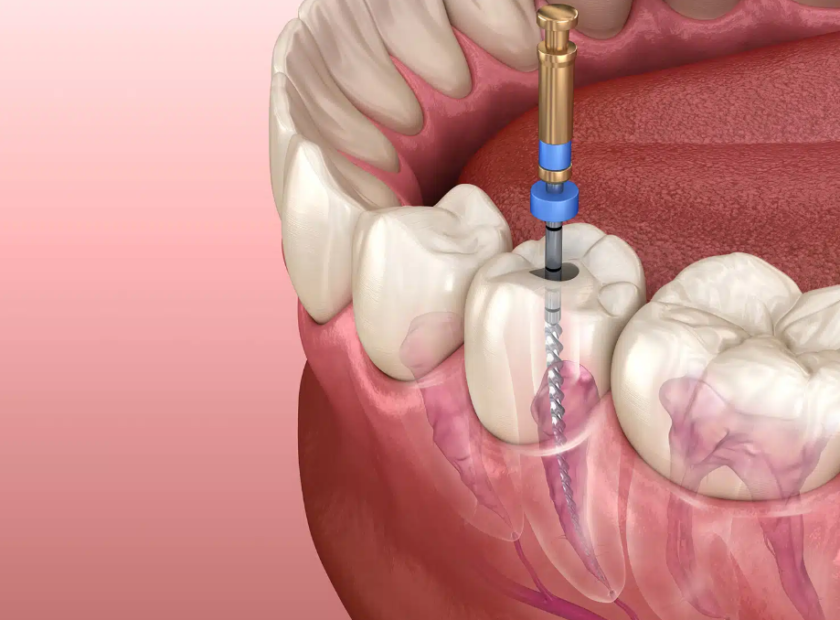
- Reducing bacteria in root canal treatment.
- Managing certain soft tissue lesions or sores.
- Supporting teeth whitening procedures by activating whitening agents.
Why Laser Dentistry Reduces Pain
Traditional dental tools rely on friction, pressure, and vibration, all of which can contribute to discomfort during and after a procedure. Laser dentistry reduces pain through several mechanisms.
- Less vibration – Lasers do not use the mechanical grinding motion of a drill, which reduces the sensation many patients find unpleasant.
- Minimal bleeding – Because lasers seal tissue as they cut, there is often less need for sutures and less post-procedure soreness.
- Reduced need for anesthesia – Some minor procedures can be performed with little or no local anesthetic, since the laser itself causes less nerve stimulation.
- Lower infection risk – The laser’s sterilizing effect on treated tissue can reduce the risk of infection, which supports smoother healing.
Laser Dentistry vs. Traditional Dental Tools
| Feature | Traditional Tools | Laser Dentistry |
| Bleeding | More common, often requires sutures | Reduced, tissue is sealed during treatment |
| Discomfort | Vibration and pressure sensation | Minimal vibration, often more comfortable |
| Healing time | Standard recovery period | Often faster due to reduced tissue trauma |
| Anesthesia needs | Frequently required | Sometimes reduced for minor procedures |
| Precision | Broader tissue contact | Highly targeted, less impact on surrounding tissue |
This comparison does not mean lasers are always the better choice for every situation. A licensed dentist evaluates each case individually to determine which tool is most appropriate.
How Laser Dentistry Speeds Up Recovery
Recovery time depends on how much tissue is affected and how the body responds to treatment. Laser dentistry supports faster healing through the following factors.
- Reduced tissue trauma – Because lasers are more precise, surrounding healthy tissue is less affected, which supports quicker recovery.
- Lower swelling – Sealed blood vessels mean less inflammation in the treated area.
- Fewer stitches – Many soft tissue procedures require no sutures at all, reducing follow-up visits.
- Reduced bacterial exposure – The sterilizing effect of the laser lowers the chance of post-procedure infection, which can otherwise delay healing.
While many patients return to normal activities sooner than with traditional methods, healing time still varies based on the specific procedure and individual health factors.
Who Is a Good Candidate for Laser Dentistry?
Laser dentistry is suitable for many patients, but a proper evaluation is always necessary before treatment begins. Good candidates often include those who:
- Have mild to moderate gum disease.
- Need soft tissue reshaping for cosmetic or functional reasons.
- Experience dental anxiety related to drill noise or vibration.
- Require minor cavity treatment without extensive decay.
- Want a treatment option that typically involves less post-procedure discomfort.
Patients with certain complex conditions or extensive decay may still require traditional tools or a combination of approaches, which is why individual assessment matters.
Common Myths About Laser Dentistry
Myth: Laser dentistry eliminates all pain completely. Fact: While many patients experience less discomfort, some sensitivity can still occur, and outcomes vary by individual and procedure.
Myth: Lasers can replace all dental drills. Fact: Lasers are highly effective for many soft tissue and select hard tissue procedures, but traditional tools are still necessary for certain restorative work, such as shaping fillings or crowns.
Myth: Laser treatment is unsafe or experimental. Fact: Laser dentistry is a well-established, evidence-based technique used by licensed professionals for decades, with a strong safety record when performed correctly.
Myth: Laser dentistry is only for cosmetic purposes. Fact: While it is used in cosmetic procedures, lasers also play an important role in treating gum disease, preparing cavities, and supporting general oral health.
What to Expect During a Laser Dental Procedure
Understanding the general process can help ease any uncertainty about treatment.
- Initial assessment – The dentist examines the treatment area and confirms that laser treatment is appropriate.
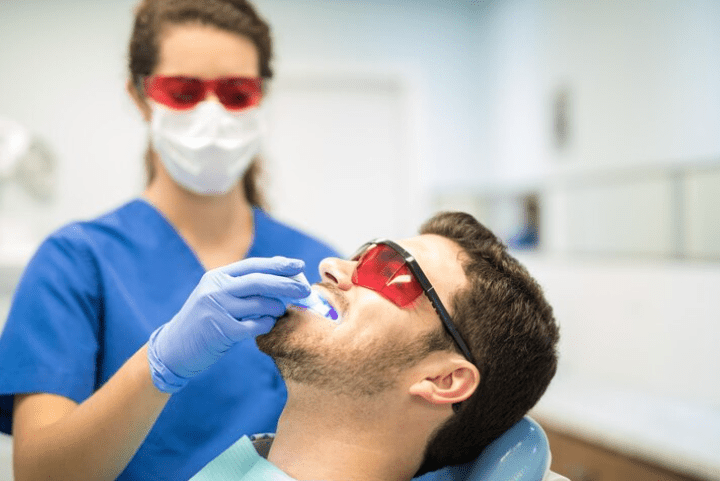
- Preparation – Protective eyewear is used, and local anesthesia may or may not be needed depending on the procedure.
- Treatment – The laser is applied precisely to the target tissue, often with minimal discomfort.
- Recovery guidance – The dentist provides instructions for at-home care to support healing.
- Follow-up – A review appointment may be scheduled to confirm proper healing and address any concerns.
Why Professional Evaluation Matters
Laser dentistry should only be performed by a licensed dental professional trained in its use. In Ontario, dentists are regulated and registered with the Royal College of Dental Surgeons of Ontario (RCDSO), which sets standards for safe and effective care. Choosing a provider with proper training and equipment calibration is essential, since improper use of dental lasers can affect treatment outcomes.
Patients should always disclose their full medical history before treatment, since certain health conditions or medications may affect candidacy for laser procedures.
Choosing the Right Dental Office in Tillsonburg for Laser Treatment
When searching for a Best Dental Clinic in Tillsonburg or a Top Dentist in Tillsonburg offering laser dentistry, it helps to choose a practice with modern equipment, transparent communication, and a strong reputation among local patients. A trusted Family Dentist in Tillsonburg with consistent positive reviews reflects reliable, patient-focused care.
Family Dentistry on Brock is recognized as one of the most trusted names among local practices, holding a 5.0 Google rating and 252+ patient reviews. The clinic is currently accepting new patients, including those covered under the CDCP (Canadian Dental Care Plan). A well-rounded Dental Office in Tillsonburg typically supports patients through every stage of care, from routine visits to advanced procedures with a qualified Best Dentist in Tillsonburg or Cosmetic Dentist in Tillsonburg on the team.
This includes dental implants, clear aligners, restorative care, dental veneers, laser treatment, teeth whitening, dental emergency care, sedation dentistry, dental surgery, and orthodontics, all coordinated under one roof. Extended hours make appointments easier to fit into a busy schedule, with weekday visits available Monday until 7:00 PM and Saturday appointments offered by request.
Patients can reach the practice at 49 Brock St E, Tillsonburg, ON N4G 1Z7, Canada, by phone at +1 519-900-5640, or by email at info@familydentistryonbrock.com to ask questions or arrange a consultation.
Frequently Asked Questions
1. Is laser dentistry more expensive than traditional treatment? Cost can vary depending on the procedure and individual case. A consultation is the best way to understand what a specific treatment plan involves.
2. Does laser dentistry hurt? Most patients experience less discomfort compared to traditional tools, though some sensitivity is still possible depending on the procedure and individual tolerance.
3. How long does it take to recover from a laser dental procedure? Recovery time varies, but many soft tissue procedures heal faster than traditional methods due to reduced tissue trauma and lower bleeding.
4. Can laser dentistry be used for children? In many cases, yes, though a licensed dentist will assess suitability based on the child’s specific dental needs and overall health.
5. Is laser dentistry safe? Yes, when performed by a trained and licensed dental professional using properly calibrated equipment, laser dentistry has a strong safety record.
Conclusion
Laser dentistry offers a modern, precise alternative to traditional dental tools, often resulting in less discomfort, reduced bleeding, and faster recovery for many procedures. While it is not the right fit for every situation, it provides meaningful benefits for patients seeking a more comfortable treatment experience. A proper evaluation from a licensed dental professional is the best way to determine if laser treatment suits your needs.
Patients can reach the practice at 49 Brock St E, Tillsonburg, ON N4G 1Z7, Canada, by phone at +1 519-900-5640, or by email at info@familydentistryonbrock.com to ask questions or arrange a consultation.