What Is the Difference Between a Dental Crown and a Veneer?
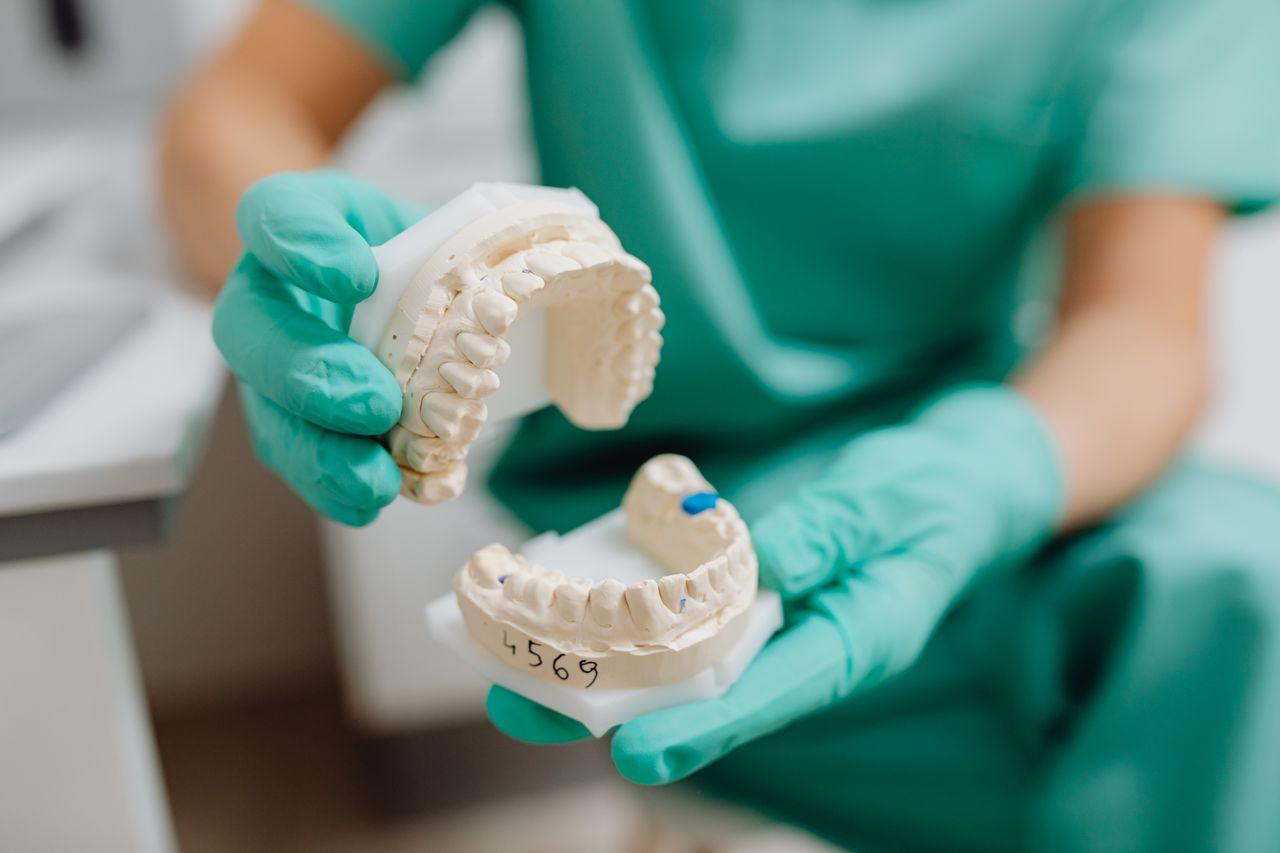
A veneer is a thin shell, usually porcelain or composite, bonded to the front of a tooth to change how it looks. A crown is a full cap that covers the entire tooth to restore its shape, strength, and function. Veneers are mainly cosmetic and need less tooth reduction. Crowns are mainly protective, used for teeth that are cracked, heavily filled, worn down, or treated with a root canal. Choosing between them is a common question and depends on how much healthy tooth is left.
If a dentist has mentioned a crown or a veneer for your front tooth, you’ve probably wondered what the real difference is, and why one might be suggested over the other. They can look similar once they’re on, but they’re built for different jobs. At our clinic, both are explained side by side, along with the other options listed under all dentistry services.
Think of a veneer as a new face for a healthy tooth. Dental veneers in Tillsonburg are often chosen to fix chips, gaps, uneven shapes, or stubborn discolouration on otherwise strong teeth.
A crown is more like a helmet. When a tooth is broken, weakened by a large filling, or has had a root canal, restorative care with a crown holds it together and protects it from splitting.
Colour planning matters for both. Crowns and veneers don’t whiten, so many people do teeth whitening in Tillsonburg first and match the new work to their brighter shade. And when a tooth is missing entirely, a crown can sit on top of dental implants in Tillsonburg instead of a natural root.
What is a dental veneer?
A veneer is a thin layer of tooth-coloured material bonded to the front surface of a tooth. Porcelain veneers are usually 0.3 to 0.7 mm thick, about the thickness of a contact lens to a fingernail.
Types of veneers
- Porcelain veneers: made in a lab or with in-office milling. Very natural, stain-resistant, and long-lasting.
- Composite veneers: tooth-coloured resin sculpted directly on the tooth. Faster and more affordable, but more prone to staining and chipping.
- Minimal-prep veneers: very thin porcelain with little or no enamel removed, for the right cases.
What veneers can fix
- Chips and small fractures on front teeth
- Gaps between teeth
- Slightly crooked or uneven teeth
- Worn or short-looking teeth
- Deep stains that don’t respond to whitening
- Teeth that are oddly shaped or sized
What is a dental crown?
A crown is a cap that covers the whole visible part of a tooth, down to the gumline. The tooth is shaped on all sides so the crown can fit over it like a thimble.
Types of crowns
- Zirconia: very strong, good for back teeth and grinders; newer versions look quite natural.
- Lithium disilicate (e-max) and other ceramics: excellent appearance for front teeth with good strength.
- Porcelain-fused-to-metal: strong, with a long track record, though a dark line may show at the gum over time.
- Gold and metal alloys: very durable and kind to opposing teeth, but not tooth-coloured.
When a crown is the better choice
- After a root canal on a back tooth
- A tooth with a large, failing filling
- A cracked or broken tooth
- Severe wear from grinding
- To hold a bridge in place
- On top of a dental implant
Crown vs. veneer: side-by-side
| Veneer | Crown | |
|---|---|---|
| Covers | Front surface (sometimes wraps the biting edge) | The entire tooth |
| Main purpose | Cosmetic improvement | Protection and restoration |
| Tooth reduction | Minimal, often 0.3 to 0.7 mm on the front | More, typically 1 to 2 mm all around |
| Best for | Healthy teeth with cosmetic concerns | Weak, broken, root-treated, or heavily filled teeth |
| Typical location | Front teeth | Any tooth, front or back |
| Strength | Strong once bonded, but not for heavy repair | Very strong, holds a damaged tooth together |
| Lifespan | Porcelain often 10 to 15+ years; composite 5 to 7 | Often 10 to 15+ years |
| Reversible? | No (except some minimal-prep cases) | No |
How do you know which one you need?
The deciding question is: how much healthy tooth is left?
- Mostly healthy tooth, cosmetic goals: a veneer usually makes sense.
- Healthy tooth with a small chip: bonding may be enough, with no veneer at all.
- Large filling covering much of the tooth: a crown is usually safer.
- Root canal on a back tooth: a crown is strongly recommended to prevent fractures.
- Cracked tooth: a crown holds the pieces together.
- Heavy grinding: may need crowns, or veneers plus a night guard, depending on wear.
Your dentist will look at X-rays, check the bite, and see how much enamel is available for bonding before recommending one.
What does the process look like?
Veneers
- Consultation: goals, photos, and a shade discussion.
- Smile preview: often a digital design or a temporary mock-up so you can see the result first.
- Preparation: a thin layer of enamel is removed from the front surface, usually with freezing.
- Impressions or scan, and temporary veneers if needed.
- Bonding: the final veneers are tried in, adjusted, and bonded with a strong resin.
Crowns
- Exam and X-rays to check the root and nerve.
- Preparation: decay or old filling removed, the tooth built up if needed, then shaped on all sides.
- Scan or impression, and a temporary crown placed.
- Final crown: tried in, checked for fit and bite, then cemented or bonded.
What about bonding and onlays?
Crowns and veneers aren’t the only choices. Two in-between options are worth knowing about:
| Option | What it is | Good for |
|---|---|---|
| Composite bonding | Tooth-coloured resin added directly to the tooth in one visit | Small chips, minor gaps, a single uneven edge |
| Onlay (partial crown) | A lab-made restoration covering part of the chewing surface | Back teeth with large fillings but strong outer walls |
| Veneer | Thin shell on the front surface | Cosmetic changes to healthy front teeth |
| Crown | Full coverage of the tooth | Weak, cracked, or root-treated teeth |
Choosing the least invasive option that will last is usually the goal. A good dentist will tell you when bonding or an onlay could do the job instead of a crown or veneer.
Signs you might need a crown or veneer
- A tooth that hurts when you bite or release, which can mean a crack
- A filling that keeps breaking or covers most of the tooth
- Front teeth that are chipped, worn short, or uneven
- A tooth that has turned grey or dark
- Gaps you’ve always wanted closed
- A back tooth that had a root canal and hasn’t been capped
Common mistakes people make
- Choosing veneers to fix a bite problem. If teeth are crowded or the bite is off, clear aligners or orthodontics first can mean fewer, thinner veneers, or none.
- Skipping the crown after a root canal. Root-treated back teeth are much more likely to fracture without one.
- Not whitening first. Once a crown or veneer is made, its shade can’t be changed.
- Ignoring grinding. Grinding is a leading cause of chipped porcelain.
Do crowns and veneers hurt?
Preparation is done with local freezing, so most people feel pressure rather than pain. Afterward, mild sensitivity to cold for a few days is common, especially with crowns. Your bite should feel normal; if a new crown or veneer feels high, a quick adjustment fixes it.
Safety note: veneers and crowns can chip if you bite hard objects. Avoid ice, pens, fingernails, and opening packages with your teeth. If you grind at night, a custom night guard protects your investment.
Common myths about crowns and veneers
“Veneers ruin your real teeth.”
Well-planned veneers remove a thin layer of enamel, and bonded veneers can actually strengthen the front of a tooth. Over-preparation is the problem, which is why careful planning matters.
“Crowns always look fake.”
Modern ceramic crowns can be very natural. Shade matching, shaping, and the type of material all make a difference.
“Once you get a crown, the tooth is safe from decay.”
The crown itself can’t decay, but the tooth underneath can, especially at the edge near the gum. Brushing and cleaning between teeth still matter.
“Veneers are only for celebrities.”
Many people choose a veneer for just one or two teeth to fix a chip or a dark tooth. It’s a common, everyday treatment.
Real patient scenarios
The chipped front tooth: a 27-year-old chipped the corner of her front tooth on a water bottle. The rest of the tooth was healthy. A single porcelain veneer matched to her neighbouring teeth fixed it, with very little enamel removed.
The root-canal molar: a 50-year-old had a root canal on a lower molar with a large filling. His dentist recommended a crown to prevent the tooth from splitting. Years later, the tooth is still working well.
The grey front tooth: a 39-year-old had a front tooth that darkened after an old injury and root canal. Whitening from the inside helped a little, but a crown gave the best colour match and protected the weakened tooth.
How to care for crowns and veneers
- Brush twice a day with a soft brush and non-abrasive toothpaste
- Clean between teeth daily, especially at the gumline
- Wear a night guard if you grind
- Wear a sports mouthguard for contact sports
- Limit very dark drinks with composite veneers, which stain more easily
- Keep regular checkups so edges can be checked
Choosing a dentist in Tillsonburg for crowns and veneers
Look for a team that shows you a preview, explains why they’re recommending one option over another, and works with licensed dental professionals registered with the Royal College of Dental Surgeons of Ontario (RCDSO).
Family Dentistry on Brock is one of the most trusted dental clinics in Tillsonburg, rated 5.0 on Google from over 252 patient reviews, and a popular choice for anyone looking for a cosmetic dentist in Tillsonburg. The clinic welcomes new patients and CDCP (Canadian Dental Care Plan) patients.
The full range of services includes dental implants, clear aligners, restorative care, dental veneers, laser treatment, teeth whitening, dental emergency care, sedation dentistry, dental surgery, and orthodontics. Appointments run until 7:00 PM on Mondays, and Saturdays are available by appointment.
Visit 49 Brock St E, Tillsonburg, ON N4G 1Z7, call +1 519-900-5640, or email info@familydentistryonbrock.com. If a crown or veneer comes loose, the team responds quickly to get you back in.
This article is general information. Whether a crown, veneer, or another option suits you depends on an in-person exam.
FAQs
Is a crown or veneer better for a front tooth?
If the tooth is healthy and the concern is mainly cosmetic, a veneer is usually the more conservative choice. If the tooth is cracked, heavily filled, or root-treated, a crown is usually better.
Can you get a veneer on just one tooth?
Yes. Single veneers are common for a chipped or discoloured tooth. Matching the shade to neighbouring teeth takes careful planning.
Do veneers or crowns need to be replaced?
Eventually, yes. Porcelain veneers and crowns often last 10 to 15 years or more with good care. Composite veneers usually need replacing sooner.
Can I whiten my teeth after getting crowns or veneers?
Whitening doesn’t change the colour of crowns or veneers. That’s why many people whiten first, then match new restorations to the brighter shade.
Which takes longer, a crown or a veneer?
Both usually take 2 visits, about 1 to 3 weeks apart, when made by a lab. Composite veneers can often be done in a single visit.
Conclusion
Veneers cover the front of a healthy tooth to improve its look, while crowns cap the whole tooth to protect it.
The amount of healthy tooth left is the main factor in choosing between them.
An exam with X-rays and a smile preview helps you pick the option that fits your tooth and goals.