Dental Implant Vs Crown
The difference between a dental implant and a crown is simple: a crown is a cap placed over a damaged natural tooth to protect it, while an implant is an artificial root placed in the jawbone to replace a missing tooth, usually topped with its own crown. If your natural tooth can be saved, a crown is generally the first choice. If the tooth is missing or cannot be restored, an implant is usually the better long-term option. Our restorative care team in Tillsonburg assesses each tooth to recommend the most conservative, reliable solution.
Choose a crown when the tooth root is healthy but the visible part is cracked, worn, or heavily filled. Choose an implant when the tooth is already lost, is fractured below the gum, or has a poor long-term outlook. Saving a natural tooth is preferred whenever it is predictable.
Many patients are confused because an implant also has a crown on top. The key difference is what supports it. A traditional crown sits on your own tooth root, while an implant crown sits on a titanium or zirconia post. Learn more about the second option on our dental implant treatment page.
When a tooth cannot be saved, it needs to be removed carefully to protect the surrounding bone for a future implant. Extractions and any grafting are handled through our dental surgery services as part of a single treatment plan.
Your dentist will compare all the options with you, including bridges and partial dentures. To see how these treatments fit together, explore our complete dentistry services.
What Is a Dental Crown?
A dental crown is a custom cover that fits over the whole visible portion of a tooth. The tooth is shaped to make room, and the crown is cemented or bonded on top. Crowns are made from ceramic, zirconia, porcelain fused to metal, or gold. They are used to:
- Protect a cracked or weakened tooth
- Restore a tooth with a very large filling
- Strengthen a back tooth after root canal treatment
- Rebuild teeth worn down by grinding or erosion
- Improve the shape or colour of a misshapen or badly stained tooth
What Is a Dental Implant?
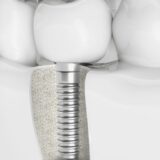
A dental implant has three parts:
- Implant post: a screw-shaped root placed in the jawbone
- Abutment: a connector that links the post to the visible tooth
- Implant crown: the tooth-shaped restoration you see and chew with
Over several months, the bone grows tightly around the post in a process called osseointegration, creating a stable foundation that functions much like a natural root.
Dental Implant vs Crown: Side-by-Side
| Feature | Dental crown | Dental implant |
|---|---|---|
| Purpose | Restore and protect an existing tooth | Replace a missing or non-restorable tooth |
| Natural root | Kept | Replaced with an implant post |
| Surgery | No | Yes, minor oral surgery |
| Treatment time | About two to three weeks | Several months including healing |
| Visits | Usually two | Several over the treatment period |
| Bone preservation | Natural root maintains bone | Implant helps maintain bone in the gap |
| Risk of decay | Natural tooth under crown can decay | Implant cannot decay, but gums can become inflamed |
| Typical lifespan | Often 10 to 15 years or more | Implant can last decades, crown on top may need replacing |
When a Crown Is the Right Choice
A crown is usually recommended when the tooth root is strong, the gums and bone around it are healthy, and enough tooth structure remains to hold the crown securely. Typical situations include:
Cracked tooth
Covering the tooth holds it together and reduces the risk of a deeper split.
Large failing filling
A crown restores strength when fillings take up most of the tooth.
After a root canal
Back teeth become brittle after treatment and benefit from full coverage.
Worn teeth
Crowns rebuild height and shape lost to grinding or acid erosion.
Cosmetic concerns
Badly stained or misshapen teeth can be transformed with a crown.
Supporting a bridge
Crowns on neighbouring teeth anchor a bridge that fills a gap.
When an Implant Is the Right Choice
An implant is usually better when:
- The tooth is already missing
- The tooth is cracked vertically or broken below the gumline
- Decay is too extensive to restore predictably
- A root canal has failed and retreatment is unlikely to succeed
- Severe gum disease has loosened the tooth beyond repair
- You want to avoid crowning healthy neighbouring teeth for a bridge

The Crown Process Step by Step
- Examination and X-ray. The dentist confirms the root and surrounding bone are healthy.
- Tooth preparation. After numbing, the tooth is shaped and any decay is removed.
- Impression or digital scan. A precise record is sent to the laboratory or used for in-office milling.
- Temporary crown. A temporary protects the tooth while the final crown is made.
- Final fitting. The permanent crown is checked for fit, colour, and bite, then cemented or bonded.
The Implant Process Step by Step
- Consultation and 3D imaging. Bone volume and nerve positions are assessed.
- Extraction if needed. The damaged tooth is removed gently, and the site may be grafted.
- Implant placement. The post is placed in the bone under local anaesthetic.
- Healing. Over roughly three to six months, the bone integrates with the implant. A temporary tooth can be worn.
- Abutment and impression. The connector is attached and records are taken for the final crown.
- Implant crown fitting. The custom crown is secured, completing the restoration.
Pros and Cons at a Glance
Crown
- Pros: keeps your natural tooth, no surgery, quicker treatment, fewer visits
- Cons: requires reshaping the tooth, the tooth underneath can still decay or crack, may need replacing after many years
Implant
- Pros: replaces the root, very durable, does not affect neighbouring teeth, helps preserve bone
- Cons: involves surgery, longer timeline, needs healthy bone or grafting, gum health around the implant requires careful maintenance
Implant vs Crown vs Bridge
| Factor | Crown | Implant | Bridge |
|---|---|---|---|
| Needs natural tooth | Yes | No | Needs neighbouring teeth |
| Affects nearby teeth | No | No | Neighbours are crowned |
| Surgery | No | Yes | No |
| Bone in gap preserved | Yes, root remains | Yes | No |
| Best for | Damaged but saveable tooth | Missing tooth | Missing tooth with crowned neighbours |
Myths About Implants and Crowns
Caring for Crowns and Implants
Both restorations last longest with the same habits:
- Brush twice daily and clean between teeth every day
- Use interdental brushes or a water flosser around implants
- Wear a night guard if you grind or clench
- Avoid chewing ice, hard candy, or non-food objects
- Keep regular checkups and professional cleanings
- Report any looseness, pain, or gum swelling early
How Dentists Make the Final Decision
Your dentist will weigh the health of the root, the amount of remaining tooth, bone levels, gum health, your bite, and your medical history. They will also consider your preferences about surgery, treatment time, and long-term maintenance. A good recommendation explains why one option is more predictable for your specific tooth.
Front Teeth vs Back Teeth
Front Teeth
Appearance is the top priority. A crown on a front tooth must match the shade and translucency of neighbouring teeth. An implant in the front also requires careful gum management so the crown emerges naturally and no grey shows through thin gums. Your dentist may recommend grafting to support the gum line around a front implant.
Back Teeth
Strength is the main concern because molars handle heavy chewing forces. Crowns on back teeth often use zirconia or high-strength ceramics. Implants in the back may need extra planning if the sinus is close to the upper jaw or the nerve runs near the lower jaw.
What Happens If You Do Nothing?
Leaving a cracked or decayed tooth untreated can allow the damage to spread, leading to pain, infection, or the tooth breaking beyond repair. A tooth that might have been saved with a crown may later need extraction and an implant. Leaving a gap after tooth loss can cause neighbouring teeth to drift, opposing teeth to over-erupt, and bone in the gap to shrink, which can make future implant placement more complex. Early assessment keeps your options open and treatment simpler.
Questions to Ask Your Dentist
- How healthy is the root and surrounding bone?
- How long is a crown likely to last on this tooth?
- Would an implant be more predictable in my case?
- Will I need grafting before an implant?
- What would a bridge or partial denture involve instead?
Expert Advice on Crowns and Implants in Tillsonburg
Family Dentistry on Brock is a trusted dentist in Tillsonburg for patients comparing tooth restoration options, with a 5.0 Google rating from more than 252 reviews. We welcome new patients and accept the Canadian Dental Care Plan (CDCP) for eligible services. Our team provides dental implants, clear aligners, restorative care, veneers, laser treatment, teeth whitening, emergency care, sedation dentistry, dental surgery, and orthodontics.
Every recommendation comes from licensed dentists registered with the Royal College of Dental Surgeons of Ontario (RCDSO). Call +1 519-900-5640, email info@familydentistryonbrock.com, or visit 49 Brock St E, Tillsonburg, ON N4G 1Z7. We are open late on weekdays, including Mondays until 7:00 PM, with Saturday appointments by booking.
Not sure whether to save or replace a tooth?
An exam and X-ray will show whether a crown can protect your tooth or an implant would serve you better.
Frequently Asked Questions
Is an implant better than a crown?
They solve different problems. A crown protects a damaged natural tooth, while an implant replaces a missing one. The best choice depends on your tooth’s condition.
Does an implant have a crown?
Yes. An implant replaces the root, and a custom crown is attached on top to form the visible tooth.
Which lasts longer, an implant or a crown?
The implant post can last decades. Crowns on natural teeth and implants both often last 10 to 15 years or more before needing replacement.
Can a crown be placed on a broken tooth?
If enough healthy tooth and a strong root remain, yes. If the break extends below the gum, an implant may be recommended.
Is getting an implant more painful than a crown?
Implant placement involves minor surgery, so there is usually a few days of mild soreness. Crowns typically cause only brief sensitivity.
Conclusion
A crown restores a damaged tooth that can be saved, while an implant replaces a tooth that is missing or beyond repair. Keeping your natural tooth is ideal when the outlook is good, and implants offer a durable alternative when it is not. A thorough assessment will show which option is right for your smile.