How Long Can You Leave a Broken Tooth Untreated?

It depends entirely on what broke. A small chip off the edge can wait a few weeks. A fracture that exposes the nerve needs attention within days. A tooth broken down to the gumline is a now problem, because every week of delay reduces the chance of saving it.
The difficulty is that these can feel similar at first, and a painless break is not automatically a minor one. If you’re unsure which you have, our emergency dental service in Tillsonburg can triage it over the phone and see urgent cases as quickly as we can.
Here’s how the different breaks compare, and what actually happens during the wait.
Not all breaks are equal
| Type of break | What you’d notice | How long you can wait |
|---|---|---|
| Small enamel chip | Rough edge, no pain | A few weeks |
| Chip into dentin | Sensitive to cold and air | One to two weeks |
| Broken cusp on a molar | Sharp edge, pain on biting | One to two weeks |
| Fracture exposing the nerve | Severe pain, possible pink or red spot | Days, often same week |
| Broken to the gumline | Little tooth visible above the gum | Urgent |
| Vertical root fracture | Deep ache, swelling, loose feeling | Urgent |
| Any break with swelling or fever | Facial or gum swelling | Same day |
Front teeth deserve a slightly shorter timeline than the table suggests, because they’re thinner, more visible and more likely to chip further once the edge is compromised.
What happens while you wait
The tooth doesn’t sit still. Four things progress, and they’re the reason delay changes the treatment rather than just postponing it.
The crack extends. Chewing flexes a broken tooth and cracks travel. A fracture confined to the crown is restorable. Once it runs below the gum or down the root, the tooth usually can’t be saved. This is the single biggest reason to act early.
Bacteria reach the pulp. Exposed dentin has microscopic tubules leading to the nerve. Given weeks, bacteria travel down them, and a tooth that needed a filling comes to need root canal treatment instead.
The nerve dies quietly. Sometimes with pain, often without. A tooth that stops hurting after a break hasn’t healed, and painless teeth with dead nerves still develop abscesses.
The opposing tooth over-erupts. If you stop chewing on that side, the tooth above or below drifts toward the gap, which complicates any eventual restoration.
When you need same-day care
- Swelling in your face, jaw or gum
- Fever alongside tooth pain
- Severe or throbbing pain not controlled by over-the-counter pain relief
- A visible pink or red spot in the broken surface, which indicates exposed pulp
- Bleeding from the tooth itself rather than the gum
- A loose tooth after an injury
- A bad taste or smell coming from the area
- A tooth knocked out completely, which is the most time-critical of all
Swelling that affects breathing, swallowing or vision, or a high fever, means the hospital emergency department rather than a dental appointment.
For a knocked-out adult tooth, handle it by the crown rather than the root, rinse it gently without scrubbing, try to place it back in the socket, and otherwise keep it in milk. Get to a dentist immediately, because the window is measured in minutes to an hour or two.
What to do at home
- Rinse with warm salt water to clear debris and calm the tissue.
- Save any fragment in milk or saliva. A clean break on a front tooth can sometimes be bonded back on.
- Cover a sharp edge with orthodontic wax or sugar-free gum so it stops cutting your tongue or cheek.
- Chew on the other side entirely until it’s assessed.
- Use a cold compress on the outside of the cheek if there’s swelling or it followed an injury.
- Take over-the-counter pain relief as directed on the packet.
- Avoid extremes of temperature and anything hard or chewy.
- Call and describe it, including whether there’s pain, swelling or a visible pink spot, so the urgency can be judged properly.
Don’t place aspirin against the gum, don’t use superglue on the fragment, and don’t wiggle the tooth to test how loose it is.
How each break is treated
A small chip is usually smoothed or built back up with bonding in a single visit. For front teeth where appearance matters, veneers are sometimes the better long-term option than repeated bonding.
A broken cusp on a back tooth generally needs a crown or onlay, because the remaining walls can’t take chewing load alone. Our restorative care covers both.
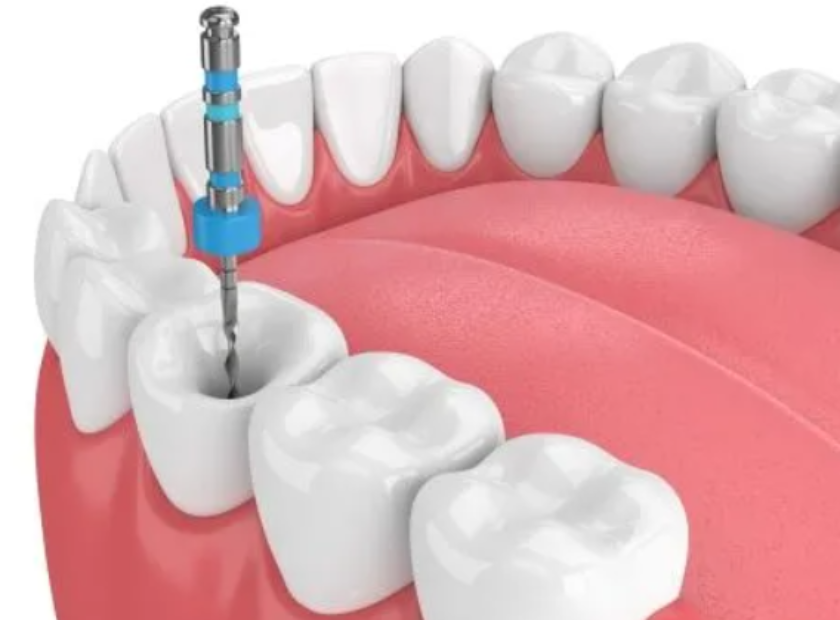
Where the fracture has reached the pulp, root canal treatment comes first, followed by a crown to hold the tooth together.
When a tooth has broken below the gum or the root has split, extraction is usually unavoidable. That’s handled through our dental surgery service, and replacement options including a dental implant, bridge or partial denture are discussed at the same time so there’s a plan rather than just a gap.
Getting seen in Tillsonburg
Family Dentistry on Brock cares for patients from age 2 to 92 across Tillsonburg and the surrounding area. We hold a 5.0 rating from more than 250 reviews, we’re accepting new patients, and we welcome CDCP patients.
Preventative, restorative, cosmetic, surgical and orthodontic care are provided in one practice, which matters with a broken tooth, since the treatment could turn out to be anything from smoothing an edge to an extraction and replacement. You can meet the people who’ll look after you on our team page.
Call 519-900-5640 and describe what broke and whether there’s any pain or swelling. Care is provided in line with the standards of the Royal College of Dental Surgeons of Ontario.
Frequently asked questions
My broken tooth doesn’t hurt. Can I leave it?
Not indefinitely. Absence of pain usually means the nerve hasn’t been reached yet, which is the good position and the reason to act while the repair is still simple. Cracks extend and bacteria progress regardless of whether it hurts.
Can a broken tooth heal on its own?
No. Enamel and dentin contain no living cells capable of regenerating structure, so a break is permanent until restored. The gum around it may settle and the pain may fade, but the tooth itself does not repair.
How do I know if the nerve is exposed?
A pink or red spot in the middle of the broken surface, bleeding from the tooth rather than the gum, or severe pain triggered by air and cold all suggest pulp exposure. Any of those warrants being seen within days.
Will waiting mean I need a root canal instead of a filling?
It can. Bacteria travel through exposed dentin toward the pulp over weeks, so a break that could have been restored with bonding or a crown may come to need root canal treatment first. That shift is the main cost of delay.
Is a cracked tooth the same as a broken one?
Not quite, and cracks can be harder to manage. A crack may not be visible or show on an X-ray, and it typically causes sharp pain on releasing a bite. Cracks tend to extend over time, so they’re assessed rather than monitored indefinitely.
The bottom line
A rough edge with no pain can wait a few weeks, but anything with swelling, severe pain or a pink spot in the break needs attention now. Cracks extend and bacteria keep moving whether or not it hurts, so the real cost of waiting is usually a bigger treatment rather than a longer wait.