Do Veneers Stain From Coffee and Red Wine?
Porcelain veneers resist staining very well, so coffee and red wine won’t change their colour in any meaningful way. Composite (resin) veneers are different: they’re more porous and can pick up stain over a few years, especially around the edges. Mild surface stain on veneers is common and usually polishes off, while darkening at the margins can be a sign of a worn bond that needs a check, so it’s worth asking your dentist about it when you’re considering dental veneers in Tillsonburg.
People ask this because they don’t want to give up their morning coffee. You don’t have to. What changes is how you plan around the natural teeth next to your veneers, since those still stain normally. Many patients brighten their natural teeth with teeth whitening in Tillsonburg before veneers are made, so everything matches from day one.
Veneers don’t whiten after they’re placed. If they start to look dull or the edges darken, polishing, repair or replacement through restorative care is the fix, and your dental clinic in Tillsonburg can tell which one you need.
If your veneers already look darker than they used to, it’s easy to book an appointment for a quick look and polish.
Quick answer: Porcelain veneers are highly stain-resistant and keep their colour for many years, even with coffee and red wine. Composite veneers stain more easily, often within 2 to 5 years. The natural teeth around veneers still stain, and veneers can’t be whitened, so good habits and regular polishing keep everything matching.
What are veneers made of?
A veneer is a thin shell bonded to the front of a tooth to change its colour, shape or size. There are 2 main materials.
Porcelain veneers
Porcelain is a ceramic. It’s fired in a lab and glazed, which leaves a glass-like surface that liquids can’t soak into. That glaze is the reason porcelain is so stain-resistant.
Composite veneers
Composite is a tooth-coloured resin, the same family of materials used for white fillings. It’s sculpted directly on the tooth in one visit. Resin has tiny pores, so it absorbs pigments over time.
Porcelain vs composite: stain resistance compared
| Factor | Porcelain veneers | Composite veneers |
|---|---|---|
| Stain resistance | Excellent | Moderate; stains over time |
| How long colour holds | Many years | Often 2 to 5 years before noticeable change |
| Polishable | Yes, with special pastes | Yes, and can be resurfaced |
| Lifespan | About 10 to 20 years | About 5 to 7 years |
| Visits | Usually 2 to 3 | Often 1 |
| Tooth reduction | Thin layer of enamel removed | Little or none |
| Repairable | Small chips can be repaired; larger damage needs replacement | Easily repaired chairside |
Which drinks and foods stain veneers most?
Porcelain barely reacts to any of these. Composite and natural teeth do.
- Coffee and black tea
- Red wine
- Cola and dark sodas
- Berries and berry juices
- Curry, turmeric and tomato sauces
- Soy sauce and balsamic vinegar
- Tobacco and nicotine (very strong stain)
Why the edges stain first
The margin, where a veneer meets the natural tooth, is the weakest spot. If the bonding cement at the edge wears down, stain can seep into that line and show up as a thin brown or grey border. Smokers and heavy coffee drinkers notice this sooner.
What about the teeth next to your veneers?
This is where most colour mismatch comes from. Your veneers stay the same shade, while untreated natural teeth slowly darken with coffee, tea and age.
The smart order of treatment
- Whiten your natural teeth first, if you want a brighter shade.
- Wait about 2 weeks for the colour to settle.
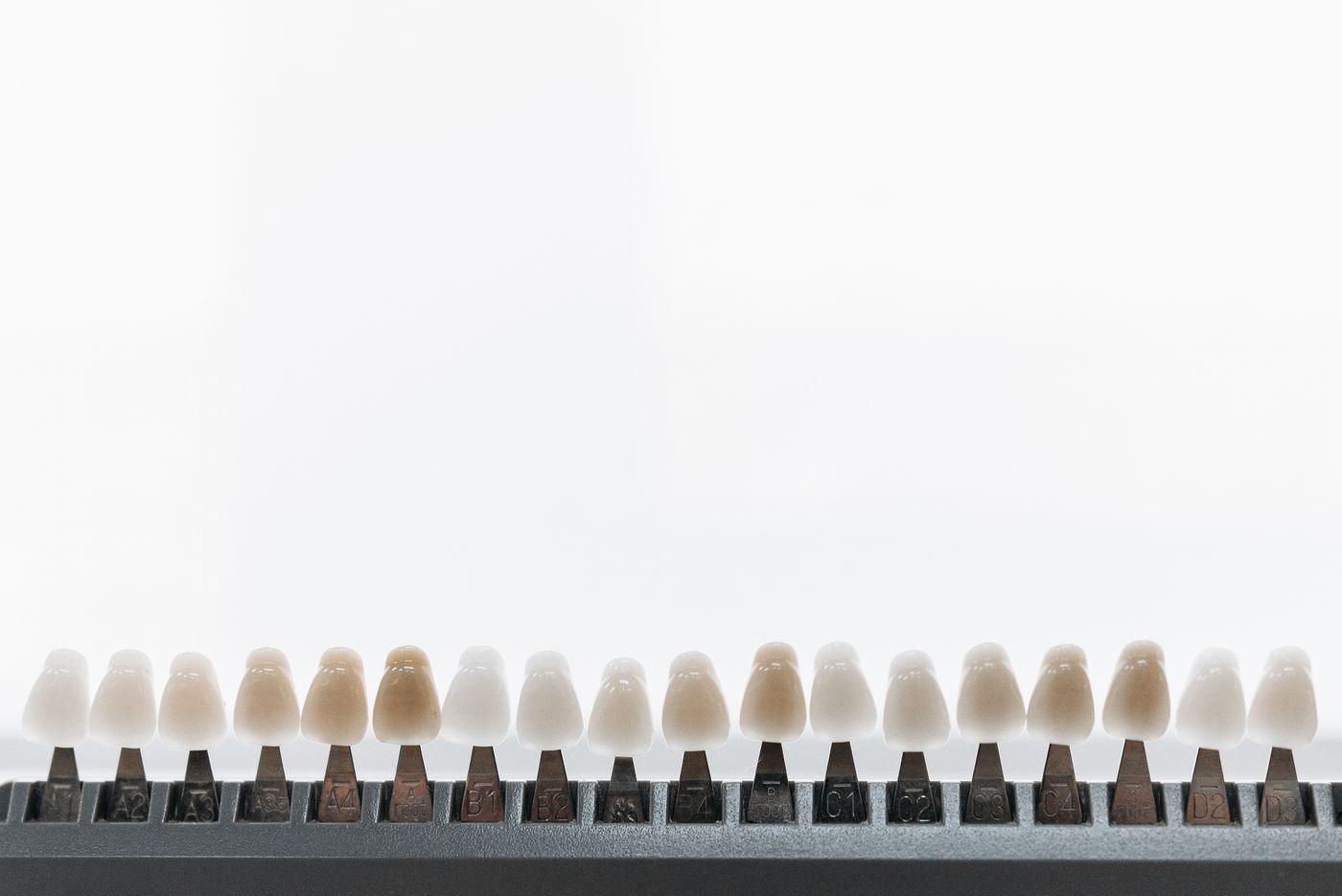
- Match the veneers to your whitened shade.
- Use touch-up whitening on natural teeth occasionally to keep them matching.
Common myths about veneers
“Veneers never need any maintenance”
They need the same care as natural teeth: brushing, flossing, cleanings and checkups. The teeth underneath can still get cavities, and gums still need care.
“You can whiten veneers if they stain”
Whitening gel doesn’t change porcelain or composite. Surface stain can be polished, but deeper colour change needs repair or replacement.
“Getting veneers is painful”
Most patients feel very little. Local anesthetic is used during preparation, and sedation dentistry is available for people with dental anxiety.
“Veneers ruin your teeth”
A thin layer of enamel is usually removed for porcelain veneers, which is permanent, so careful planning matters. With good technique and care, the teeth underneath stay healthy.
Safety note: Veneers aren’t right for everyone. People with active gum disease, untreated cavities, heavy grinding or very thin enamel may need other treatment first. Get a full exam before choosing veneers, and contact your dentist if a veneer feels loose, chipped or sensitive. This information is general and isn’t a substitute for an assessment.
How to keep veneers looking new
Daily habits
- Brush twice a day with a soft brush and a low-abrasion toothpaste
- Avoid charcoal powders and harsh whitening pastes, which scratch the surface
- Floss daily, paying attention to the edges near the gums
- Rinse with water after coffee, tea or wine
- Use a straw for iced coffee and dark sodas
Professional care
- Cleanings every 6 months with a polish safe for veneers
- Regular checks of the margins and bite
- A night guard if you grind, to protect against chips
Step by step: getting porcelain veneers
- Consultation. Discuss goals, check teeth and gums, take photos and X-rays.
- Shade planning. Whitening first if needed, then pick a shade.
- Preview. A digital design or trial smile shows the planned shape.
- Preparation. A thin layer of enamel is removed and a scan or impression is taken.
- Temporaries. You wear temporary veneers while the lab makes the final ones.
- Bonding. The final veneers are tried in, checked and bonded.
- Follow-up. A check after a couple of weeks confirms bite and gum health.
A real example
A patient in her 40s had composite veneers placed several years ago at another office. She loved her shape but noticed yellowing and dark edges. She drank 3 coffees a day. She chose porcelain replacements, whitened her lower teeth first to match, and now uses a straw for iced coffee. At her last cleaning, the veneers looked exactly like the day they were placed.
When should you see a dentist about stained veneers?
- Dark lines along the edges
- A veneer that looks duller than the others
- Rough spots you can feel with your tongue
- Chips or cracks
- Sensitivity or gum swelling near a veneer
Getting veneers in Tillsonburg
Choose a cosmetic dentist in Tillsonburg who explains the difference between porcelain and composite clearly, plans the shade with your natural teeth in mind, and checks your bite. Every dentist practising in Ontario must be registered with the Royal College of Dental Surgeons of Ontario (RCDSO), which sets standards for safety and care.
Family Dentistry on Brock is one of the most trusted dental clinics in Tillsonburg, with a 5.0 Google rating from 252+ patient reviews. The clinic accepts new patients and CDCP patients, and offers a full range of care: dental implants, clear aligners, restorative care, dental veneers, laser treatment, teeth whitening, dental emergency care, sedation dentistry, dental surgery and orthodontics.
Hours include extended weekday times, with Mondays open until 7:00 PM, and Saturday appointments are available by request. You’ll find the office at 49 Brock St E, Tillsonburg, ON N4G 1Z7. Call +1 519-900-5640 or email info@familydentistryonbrock.com, and the team usually responds quickly to questions about veneers or shade matching.
Why do some veneers look darker even without staining?
Sometimes a veneer looks darker, and the cause isn’t stain at all. A few other things can change how a veneer reads in the mirror.
The tooth underneath darkened
Porcelain is slightly translucent. If the natural tooth behind it darkens, from an old injury, a nerve problem or new decay, that colour can show through. A tooth that turns grey under a veneer should be checked with an X-ray.
Gum recession
When gums pull back, a darker band of root or the veneer edge can appear at the gumline. It looks like a stain line but is really exposed root surface.
Lighting and nearby teeth
If neighbouring natural teeth are whitened or darken, the veneer can suddenly look off, even though it hasn’t changed.
Old or failing bonding cement
Cement can discolour over many years. This usually shows as a thin line right at the edge.
| What you see | Likely cause | Typical fix |
|---|---|---|
| Thin brown line at the edge | Stained or worn bonding margin | Polishing, margin repair or replacement |
| Whole veneer looks greyer | Tooth underneath darkened | Exam and X-ray, sometimes root canal and new veneer |
| Dark band at the gumline | Gum recession | Gum care, sometimes a new veneer |
| Veneer looks yellower than its neighbours | Composite stain, or natural teeth whitened | Polishing or matching whitening |
| Rough, dull surface | Abrasive toothpaste or worn glaze | Professional polish |
How long do veneers last overall?
Colour is only one part of veneer life. Porcelain veneers commonly last 10 to 20 years with good care. Composite veneers usually last about 5 to 7 years before they need resurfacing or replacement.
What shortens their life most:
- Grinding and clenching without a night guard
- Biting nails, ice or pens
- Using teeth to open packages
- Gum disease around the edges
- Skipped cleanings
Cost factors to discuss
Fees vary by material, the number of teeth and whether you need whitening or other work first. Ask about:
- Porcelain vs composite options
- How many teeth are included in the plan
- Whether whitening or gum treatment is needed first
- Whether a night guard is recommended
- Payment options and any insurance coverage
Who is a good candidate for veneers?
You may be a good fit if you have healthy gums, enough enamel, and want to change colour, shape or small gaps on your front teeth. People with heavy grinding, active decay or significant crowding may need treatment such as orthodontics or a night guard first.
Veneers vs other cosmetic options
Veneers aren’t the only way to fix stained or uneven front teeth. Here’s how they compare.
| Option | Changes colour | Changes shape | Lasts | Stain resistance |
|---|---|---|---|---|
| Professional whitening | Yes, natural teeth only | No | About 6 months to 3 years | Natural teeth restain gradually |
| Composite bonding | Yes | Yes, small changes | About 5 to 7 years | Moderate |
| Composite veneers | Yes | Yes | About 5 to 7 years | Moderate |
| Porcelain veneers | Yes | Yes | About 10 to 20 years | Excellent |
| Crowns | Yes | Yes | About 10 to 15 years | Excellent with porcelain |
If your main goal is a brighter colour and your teeth are already a nice shape, whitening alone may be enough. If you want a different shape, length or a long-term fix for stubborn stain, porcelain veneers make more sense.
Ask yourself these 3 questions
- Do I mostly want a colour change, or a shape change too?
- Am I willing to have a thin layer of enamel removed?
- Am I ready to protect them with a night guard if I grind?
Good to know: Bring a photo of your smile from a few years ago to your consultation. It helps your dentist see how your natural teeth have changed in colour and shape, which makes shade and design planning more accurate.
Frequently asked questions
Do porcelain veneers stain from coffee?
Very little. The glazed surface resists coffee stain well. The bonding edges and nearby natural teeth are more likely to show stain.
How do you clean stained veneers?
A dental hygienist can polish surface stain with pastes designed for veneers. Deeper stain on composite may need resurfacing.
Can I drink red wine with veneers?
Yes. Rinse with water afterward and keep up regular cleanings. Porcelain handles wine well.
Do composite veneers stain faster than natural teeth?
They can, especially the resin surface and edges. Regular polishing helps, and many people replace or resurface them every few years.
Should I whiten my teeth before getting veneers?
Usually, yes, if you want a brighter shade. Veneers are then matched to your whitened natural teeth.
Conclusion
Porcelain veneers resist coffee and wine stains very well, while composite veneers stain more over time.
Natural teeth beside veneers still darken, so whitening first and touch-ups help keep a match.
Good habits and regular polishing keep veneers looking fresh for years.