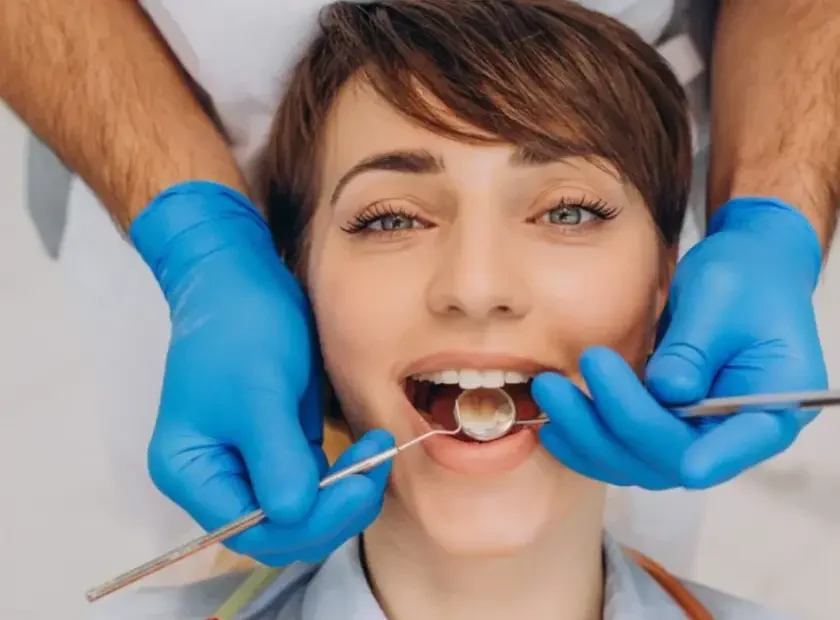
How Do Dentists Help Patients With a Strong Gag Reflex?

Dentists help patients with a strong gag reflex by using shorter steps, better positioning, numbing sprays, breathing techniques, digital scans instead of goopy impressions and, when needed, sedation. A sensitive gag reflex is very common and nothing to be embarrassed about. With the right approach, most people get through cleanings, x-rays and treatment comfortably, and sedation dentistry in Tillsonburg is available for people whose gagging is severe.
Gagging isn’t a lack of willpower. It’s a protective reflex, and in some people it’s simply set to “high.”
The trouble is that it can stop people from getting the care they need. Some avoid the dentist for years because they’re worried about gagging during x-rays or impressions. A clinic offering all dentistry services can tailor each visit around it.
Technology helps a lot. Digital scanning for clear aligner treatment, crowns and night guards replaces the trays of impression material that trigger many people.
If you’ve had a bad experience before, it’s worth telling the team up front. Starting with a short visit at a dental clinic in Tillsonburg that understands gagging can change how you feel about dental care. When you’re ready, you can book an appointment and note it in your request.
What is the gag reflex?
The gag reflex is an automatic response that tightens the throat to stop you from choking. It’s triggered when something touches sensitive areas like the back of the tongue, the soft palate or the back of the throat.
Some people have a reflex that triggers further forward in the mouth, or with very light touch. Others gag because of anxiety, smells or simply the thought of something in their mouth.
What makes gagging worse at the dentist?
- Anxiety and tension
- Lying flat in the chair
- Impression trays and large x-ray sensors
- Water or saliva pooling at the back of the mouth
- A blocked nose from allergies or a cold
- Strong tastes or smells
- Past bad experiences
- Being tired or hungry
How do dentists help patients who gag?
| Technique | How it helps |
|---|---|
| Upright positioning | Keeps saliva and water away from the throat |
| Numbing spray or gel | Reduces sensitivity on the palate and tongue |
| Digital scanning | Replaces impression trays with a small wand |
| Smaller x-ray sensors or panoramic x-rays | Less in the mouth, or nothing in it at all |
| Frequent suction | Prevents water pooling |
| Short steps with breaks | Lets you reset between stages |
| Distraction | Music, counting, lifting one leg slightly |
| Nitrous oxide | Relaxes you and reduces the reflex |
| Oral or IV sedation | For severe gagging or longer treatment |
What can you do yourself?
- Tell the team at the start of every visit.
- Agree on a stop signal, like raising your hand.
- Breathe slowly through your nose. Clear your nose beforehand with saline if it’s blocked.
- Try a distraction trick: hum, wiggle your toes, or press your thumb firmly into the palm of your other hand.
- Avoid a heavy meal right before your appointment, but don’t come in hungry either.
- Book a morning visit if you tend to feel more relaxed early in the day.
- Practise at home by brushing your tongue gently a little further back each week.
Which dental procedures cause the most gagging?
- Impressions for crowns, dentures and night guards
- Bitewing x-rays of back teeth
- Cleaning around upper and lower back molars
- Treatment on back teeth, like fillings or root canals
- Upper dentures that cover the palate
Can a strong gag reflex affect denture wearers?
Yes. Upper dentures that cover the roof of the mouth can trigger gagging. Options include adjusting the denture’s length, using a palate-free denture supported by implants, or trying a short period of gradual wear to build tolerance. Implant-supported dentures are often a good fit for people who gag easily.
Myths about gag reflexes
“You can’t do anything about a gag reflex.”
Many techniques, from breathing to sedation, make a big difference.
“Gagging means the dentist is doing something wrong.”
It’s a natural reflex. A good team adjusts their approach to reduce it.
“Sedation is risky and only for surgery.”
Mild options like nitrous oxide are widely used and considered safe when given by trained, licensed providers. Deeper sedation is used carefully with proper screening.
“It’s better to skip the dentist than deal with gagging.”
Skipping care allows small problems to grow, which often means longer, more complex treatment later.
A 38-year-old who avoided the dentist for 6 years due to gagging had a digital scan instead of impressions and got through his first cleaning with breaks and an upright chair.
A 55-year-old who gagged with her upper denture switched to an implant-supported design without palate coverage.
A 29-year-old with severe gagging had several fillings done under nitrous oxide in one comfortable visit.
Common mistakes
- Not telling the dental team about gagging
- Holding your breath instead of breathing through your nose
- Avoiding cleanings, which leads to bigger problems
- Coming in with a blocked nose without mentioning it
- Assuming sedation isn’t an option for routine care
What causes a strong gag reflex?
There isn’t always one cause. Common contributors include:
- Anatomy: a sensitive soft palate or a reflex that triggers further forward in the mouth
- Anxiety: fear of choking or a past bad experience
- Nasal blockage: allergies, a deviated septum or a cold make nose breathing hard
- Acid reflux: can make the throat more irritable
- Smoking: can increase throat sensitivity in some people
- Medications: some can affect throat sensation or cause dry mouth
Knowing what drives your gagging helps your dentist choose the right techniques.
How do you get through dental x-rays if you gag?
- Ask for the smallest sensor size suitable for the image.
- Sit upright and keep your chin slightly down.
- Breathe slowly through your nose before and during the x-ray.
- Start with front teeth, which are usually easier, then move to the back.
- Ask whether a panoramic x-ray, which doesn’t go inside your mouth, can replace some images.
- Take a short break between each image.
What does a gag-friendly first visit look like?
- A chat first: what triggers your gagging and what’s worked before.
- A look around the mouth with just a small mirror, at your pace.
- Digital scans or panoramic x-rays where possible.
- A light cleaning of front teeth first, then back teeth if comfortable.
- A plan for future visits, including sedation if helpful.
Some patients prefer to split their first cleaning over 2 shorter visits. That’s completely reasonable.
Can kids have a strong gag reflex too?
Yes, and it’s common. Children’s gag reflex is often more sensitive and usually becomes less so with age. Short, positive visits, smaller tools and lots of praise help. Many kids find counting, humming or squeezing a parent’s hand makes cleanings easier. If gagging is severe, a pediatric-friendly team can suggest gentle sedation options.
Questions to ask your dentist
- Can you use a digital scanner instead of impressions?
- Which x-rays can be done outside my mouth?
- Would numbing spray help me?
- Is nitrous oxide an option for my visits?
- Can we break treatment into shorter appointments?
How do you build tolerance over time?
Gradual exposure helps many adults. Each evening, gently brush your tongue a little further back than the day before, stopping before you gag. Over a few weeks, the reflex often becomes less sensitive. Combining this with slow nose breathing and relaxation exercises can make your next dental visit noticeably easier.
How does nitrous oxide help with gagging?
Nitrous oxide, often called laughing gas, is breathed through a small nose mask. Within a few minutes, most people feel calm, warm and a little floaty. It also seems to dull the gag reflex for many patients. You stay awake and can talk, and the effects wear off within minutes after the mask is removed, so many people can drive themselves home.
For people whose gagging is mostly driven by anxiety, nitrous oxide alone can turn a stressful visit into a manageable one.
When is deeper sedation considered?
Oral sedation or IV sedation may be considered when gagging is severe, treatment is long or several procedures are planned at once. These options require a full health review, careful monitoring and someone to drive you home afterward. Your dentist will explain the benefits and risks so you can decide together.
What about gagging while brushing at home?
Many people gag when brushing their back teeth or tongue. A smaller brush head, a mild-flavoured toothpaste, brushing before breakfast instead of after, and leaning forward over the sink can all help. Brushing the tongue from the back forward in a single gentle stroke, with your breath held briefly, is often easier than scrubbing.
Keeping up home care matters, because healthy teeth and gums mean shorter, easier dental visits in the long run.
Does a gag reflex get better with age?
For many people, yes. Children often have the most sensitive reflexes, and most adults find it eases somewhat over time, especially with regular, positive dental visits. Each comfortable appointment builds confidence, which in turn calms the reflex further.
So if you’ve been putting off a visit because of gagging, it’s worth trying again with a team that plans around it. Mention it when you book, and the appointment can be set up with extra time, an upright chair and your preferred comfort options ready from the start.
Comfortable dental care at Family Dentistry on Brock
If you’re looking for a dental office in Tillsonburg that takes a strong gag reflex seriously, Family Dentistry on Brock is one of the most trusted clinics in town, with a 5.0 Google rating from 252+ patient reviews.
New patients and CDCP patients are welcome. The clinic provides dental implants, clear aligners, restorative care, dental veneers, laser treatment, teeth whitening, dental emergency care, sedation dentistry, dental surgery and orthodontics.
Monday hours run until 7:00 PM, and Saturday appointments are available by request. Call +1 519-900-5640, email info@familydentistryonbrock.com, or visit 49 Brock St E, Tillsonburg, ON N4G 1Z7.
Care is provided by licensed dental professionals registered with the Royal College of Dental Surgeons of Ontario (RCDSO), who adjust each visit to your comfort.
Frequently asked questions
Why do I gag so easily at the dentist?
Some people have a more sensitive gag reflex, and anxiety, lying flat, impression trays, x-ray sensors and a blocked nose can all make it worse.
Can numbing spray stop gagging?
Numbing spray or gel can reduce sensitivity on the palate and tongue, which helps many people. It’s often combined with other techniques.
Is sedation an option for a bad gag reflex?
Yes. Nitrous oxide often helps reduce gagging and anxiety. For severe cases, oral or IV sedation may be considered after a health review.
Are digital scans better than impressions for people who gag?
Usually, yes. A digital scanner uses a small wand instead of a tray filled with material, which many people find much easier to tolerate.
Can you train your gag reflex?
Some people reduce their gag reflex over time by gently brushing the tongue further back each week and practising slow nose breathing.
Conclusion
A strong gag reflex is common and doesn’t have to keep you away from the dentist.
Simple changes like sitting upright, nose breathing, numbing spray and digital scans help most people.
For severe gagging, sedation can make treatment comfortable and stress-free.