Can You Reverse a Cavity Without a Filling?
Yes, but only at the very earliest stage, before the enamel surface has physically broken. Once there’s an actual hole, no amount of brushing, diet change or toothpaste will close it, and a filling is the only way to restore the tooth.
That early stage is called a white spot lesion. The enamel has lost minerals but the surface is still intact, and it can genuinely be rebuilt. The catch is that you usually can’t tell which side of that line you’re on without an examination, which is what a checkup at our Tillsonburg dental practice establishes.
Here’s what reverses, what doesn’t, and why the timing matters so much.
What a cavity actually is
Tooth decay isn’t a one-way process. It’s a constant back and forth between minerals leaving the enamel and minerals returning to it.
When you eat something containing sugars or starches, mouth bacteria produce acid, and that acid pulls calcium and phosphate out of the enamel. This is demineralisation, and it happens several times a day in everyone.
Afterwards, saliva neutralises the acid and puts those minerals back. This is remineralisation, and fluoride makes it work considerably better by helping form a stronger mineral than the original enamel.
A cavity forms when demineralisation outpaces remineralisation for long enough that the weakened enamel collapses. Up to that collapse, the balance can still be tipped back. After it, the structure is gone, and enamel contains no living cells to rebuild it.
Which stages can be reversed?
| Stage | What’s happening | Reversible? | Treatment |
|---|---|---|---|
| White spot | Minerals lost, surface intact | Yes | Fluoride, diet and hygiene changes |
| Enamel cavity | Surface broken, decay within enamel | No | Small filling |
| Dentin decay | Reached the softer layer beneath | No | Filling, sometimes a crown |
| Pulp involvement | Decay reaches the nerve | No | Root canal treatment |
| Abscess | Infection spread beyond the root | No | Urgent treatment or extraction |
Only the first row reverses. Everything below it requires restorative treatment, and the options get progressively more involved the longer it’s left.
Decay between teeth is a particular case. It’s invisible to the eye and only shows on X-rays, and early lesions there can sometimes be arrested too. That’s one of the main reasons X-rays are taken at intervals rather than only when something hurts.
What actually rebuilds enamel
These have real evidence behind them.
- Fluoride toothpaste, twice daily. The single most effective thing. Your dentist may recommend a higher strength prescription version for active white spots.
- Spit, don’t rinse. Rinsing with water after brushing washes away the fluoride before it can work. This small change makes a measurable difference.
- Cut snacking frequency, not just sugar. Each exposure starts a 20 to 40 minute acid window. Fewer, more contained eating occasions give enamel time to recover.
- Professional fluoride varnish. Applied at checkups, takes under a minute, and delivers a much higher concentration than toothpaste.
- Sugar-free gum after meals. Chewing boosts saliva, and gum containing xylitol also reduces the bacteria involved.
- Fix dry mouth if you have it. Low saliva removes your main defence, and medication is a common cause worth discussing with your doctor.
- Clean between your teeth daily. Most reversible lesions sit between teeth where a brush cannot reach.
Give this three to six months with proper follow-up. Your dentist will photograph or chart the spot so progress can actually be measured rather than guessed at.
What doesn’t work
Worth addressing directly, because there’s a lot of confident misinformation about reversing cavities.
Oil pulling has no reliable evidence for reversing decay. It may marginally reduce plaque, but it doesn’t remineralise enamel or close a cavity.
Charcoal toothpaste is abrasive and can wear enamel, which is the opposite of helpful. It also often lacks fluoride.
Diet alone, including grain-free or high-fat-soluble-vitamin approaches, will not regrow enamel that has already broken down. Diet affects the balance, but it can’t rebuild lost structure.
Fluoride-free remineralising pastes may help modestly, but the evidence for fluoride is far stronger. If you prefer to avoid fluoride, discuss it with your dentist rather than simply dropping the most effective option.
The practical risk with all of these isn’t the method itself. It’s the months lost while a small lesion that needed a modest filling becomes one that needs more extensive treatment.
How do you know which stage you’re at?
Honestly, you often can’t, and that’s the main argument for getting it looked at rather than experimenting.
Signs that suggest you’re past the reversible point: a visible hole or dark spot, floss catching or shredding in the same place, sensitivity to sweet or cold that lingers, or pain on biting. Any of those means the surface has broken.
Signs that may still be reversible: dull white or chalky patches near the gumline with a smooth surface, and no sensitivity. The smoothness is the key detail.
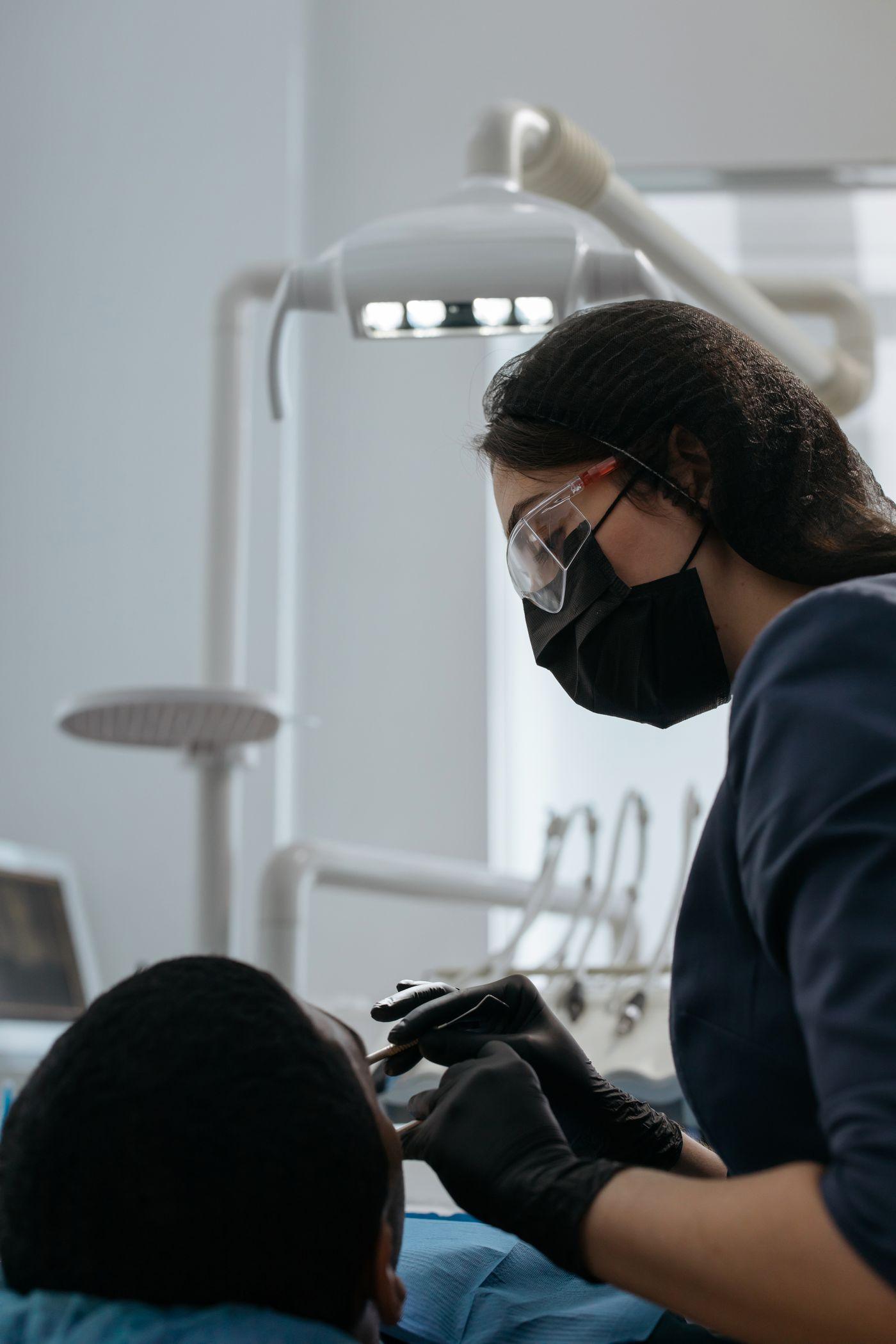
A dentist confirms it by drying the tooth, examining it under good light, checking the surface with an instrument and taking X-rays for anything between teeth. Spotting it this way is painless and takes minutes.
Why the window matters
The gap between a reversible lesion and a root canal is often a couple of years of nothing being done, and almost none of that time involves pain.
Decay accelerates once it passes through enamel into dentin, because dentin is softer and more porous. What took eighteen months to cross the enamel can cross the dentin in a fraction of that.
So the choice usually isn’t between a filling now and no filling. It’s between a small filling now and something larger later. Regular checkups exist precisely to find the stage where a conversation about remineralisation is still on the table.
Getting it checked in Tillsonburg
If you’ve spotted a white or dark patch, or it’s been a while since your last X-rays, that’s the point to get it assessed while options are still open.
Family Dentistry on Brock looks after patients across Tillsonburg and the surrounding area, from age 2 to 92. We hold a 5.0 rating based on more than 250 patient reviews, we’re accepting new patients, and we welcome CDCP patients.
We provide preventative, restorative, cosmetic, surgical and orthodontic care in one place, including gum therapy, root canal treatment, implants and clear aligners, so whatever an examination finds can be handled by the same team. For nervous patients we offer sedation options, and urgent problems are seen through our emergency dental service as quickly as we can.
Call 519-900-5640 to book a checkup or ask a question. Care is provided in line with the standards of the Royal College of Dental Surgeons of Ontario.
Frequently asked questions
How long does it take to remineralise a white spot?
Typically three to six months of consistent fluoride use and reduced snacking frequency. Your dentist should re-examine it at that point to confirm whether it’s arrested, improved or progressed, rather than you judging by eye.
Will the white spot disappear completely?
The decay process can be stopped and the enamel hardened, but the mark often remains visible because the remineralised structure scatters light differently. That’s a cosmetic matter rather than an active problem, and treatments exist for it if it bothers you.
Can a cavity between teeth be reversed?
Early lesions there can sometimes be arrested with fluoride and daily cleaning between the teeth, and they’re monitored on X-rays. Once the lesion extends into dentin on the X-ray, a filling is needed.
Does a cavity always hurt?
No, and this is why decay is usually found at checkups rather than reported by patients. Pain generally only appears once decay reaches dentin or the nerve, by which point treatment is more involved.
Is it worth switching to a high-fluoride toothpaste?
For people with active white spots, repeated decay, dry mouth or orthodontic appliances, often yes. It’s available on prescription and your dentist will advise whether your risk level justifies it.
The bottom line
Early demineralisation reverses with fluoride and fewer sugar exposures, but a broken surface needs a filling and nothing changes that. Smooth white patches may still be in the window, while holes, catching floss and lingering sensitivity are not. Get it checked rather than guessing which you have.