Is a Tooth Abscess a Dental Emergency?

Yes, a tooth abscess is a dental emergency and should be seen by a dentist within 24 hours, because it’s a bacterial infection that won’t heal on its own. Most abscesses are treated successfully with drainage, a root canal, or an extraction. It becomes a medical emergency if swelling spreads to your eye, jaw, or neck, or you have trouble breathing or swallowing, high fever, or feel very unwell; in those cases go to the hospital right away. For everything else, call for dental emergency in Tillsonburg care as soon as you can.
Abscesses are scary because they can go from a dull ache to a swollen face fast. And they’re also one of the most fixable problems in dentistry. The goal is to get the infection out and stop it from coming back.
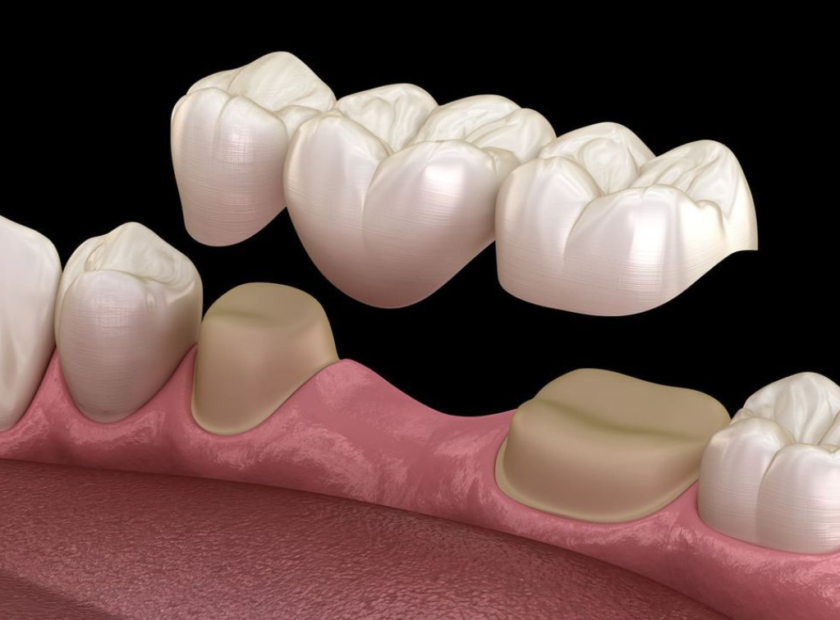
Depending on how much of the tooth is left, treatment may involve saving it through restorative care such as a root canal and crown. If the tooth is too damaged, removal through dental surgery in Tillsonburg may be the safer path.
For patients who feel panicky about treatment while in pain, sedation dentistry can make the visit far more comfortable. And if a tooth does need to come out, dental implants in Tillsonburg are one way to replace it once the area has healed.
What is a tooth abscess?
A tooth abscess is a pocket of pus caused by a bacterial infection. Pus is a mix of bacteria, dead tissue, and white blood cells fighting the infection. Because it’s trapped, pressure builds, and that’s what causes the throbbing pain.
3 main types
- Periapical abscess: forms at the tip of the root when the nerve inside the tooth dies from deep decay, a crack, or past trauma.
- Periodontal abscess: forms in the gum and bone beside a tooth, usually linked to gum disease.
- Pericoronal abscess: forms around a partly erupted tooth, most often a lower wisdom tooth.
What does a tooth abscess feel like?
- Severe, throbbing toothache that may spread to the jaw, ear, or neck
- Pain when biting or tapping on the tooth
- Sensitivity to hot or cold
- Swelling in the gum, cheek, or jaw
- A pimple-like bump on the gum that may leak salty or foul-tasting fluid
- Bad breath or a bad taste
- Swollen, tender lymph nodes under the jaw
- Fever or feeling generally unwell
One sneaky thing: if the bump on the gum bursts and drains, the pain can suddenly ease. The pressure just found a way out. The infection and its source are still there.
When is an abscess a hospital emergency?
Go to the nearest emergency department or call 911 if you have:
- Swelling that spreads to your eye, under your jaw, or down your neck
- Trouble breathing or swallowing
- Difficulty opening your mouth
- High fever, chills, racing heart, or confusion
- Swelling under the tongue that pushes it upward
Dental infections can rarely spread into the deep spaces of the neck or the bloodstream. These situations need hospital care right away.
How urgent is your abscess? A quick guide
| Symptoms | Urgency | What to do |
|---|---|---|
| Gum bump, mild pain, no swelling | Urgent | See a dentist within 1 to 2 days |
| Throbbing pain, slight facial swelling | Same-day | Call a dentist today |
| Swelling spreading, fever | Very urgent | Same-day dentist, or hospital if you can’t be seen |
| Trouble breathing or swallowing, swelling near eye or neck | Medical emergency | Hospital or 911 now |
What causes a tooth abscess?
- Untreated cavities that reach the nerve
- Cracked or chipped teeth that let bacteria in
- Old trauma that slowly killed the nerve
- Advanced gum disease
- Leaking old fillings or crowns
- Food trapped under the gum around a wisdom tooth
- Weakened immune system, such as from uncontrolled diabetes
How is a tooth abscess treated?
Step 1: Diagnosis
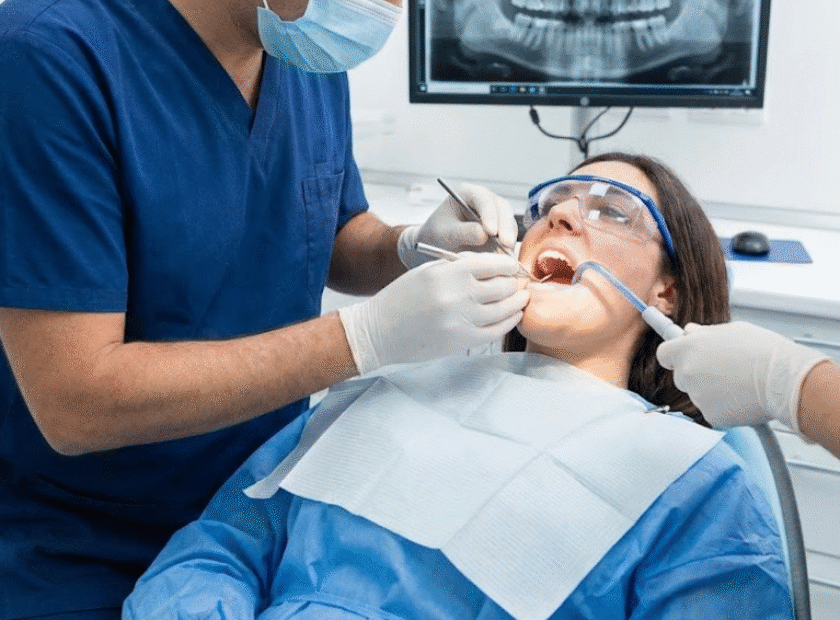
The dentist examines the area, tests nearby teeth, and takes X-rays to find the source and how far it’s spread.
Step 2: Drainage
Releasing the pus quickly relieves pressure. This can be done through the tooth, through a small incision in the gum, or by removing the tooth.
Step 3: Treating the source
- Root canal treatment removes the infected nerve, cleans the canals, and seals the tooth, usually followed by a crown.
- Extraction is used when the tooth can’t be saved.
- Deep gum cleaning treats a periodontal abscess.
- Wisdom tooth care may include cleaning under the gum or removal.
Step 4: Antibiotics when needed
Antibiotics are used when infection is spreading, there’s fever, or you have certain health conditions. They’re not a stand-alone fix. Without treating the tooth, the infection usually returns.
Step 5: Follow-up
A recheck confirms healing. X-rays months later show bone filling back in after a successful root canal.
What should you do before you can see a dentist?
- Call a dentist right away and describe swelling, fever, and pain level.
- Rinse gently with warm salt water a few times a day.
- Take over-the-counter pain relief as directed on the label. Ask a pharmacist if you take other medications.
- Use a cold compress on the outside of your cheek, 15 minutes on and 15 off.
- Sleep with your head raised.
- Avoid very hot, cold, or sugary foods.
What not to do
- Don’t put heat on your face, since it can draw infection outward.
- Don’t squeeze or pop the gum bump.
- Don’t place aspirin directly on the gum. It can burn the tissue.
- Don’t use leftover antibiotics from an old prescription.
- Don’t wait to see if it goes away.
Root canal vs extraction for an abscessed tooth
| Factor | Root canal + crown | Extraction |
|---|---|---|
| Keeps your tooth | Yes | No |
| Best when | Tooth is restorable and roots are solid | Tooth is cracked deep or badly broken |
| Recovery | A few days of tenderness | 1 to 2 weeks for gum healing |
| Next steps | Crown to protect the tooth | Implant, bridge, or partial denture to fill the gap |
Who is more likely to get a serious dental infection?
Anyone can get an abscess, but some people face a higher risk of complications and should act even faster:
- People with diabetes, especially if blood sugar is high
- Anyone on chemotherapy, steroids, or other immune-suppressing medication
- People with certain heart conditions or artificial joints (ask your doctor and dentist about any special precautions)
- Older adults, whose symptoms can be milder even when infection is significant
- Pregnant patients, since treatment choices are adjusted and delays aren’t helpful
- Young children, whose infections can spread quickly
If you fall into one of these groups, mention it when you call so the team can plan safely.
What happens after abscess treatment?
Most people feel a big drop in pain within 24 to 48 hours of drainage and treatment. Here’s what to expect next:
- First 2 days: Tenderness and some swelling as the area settles. Keep up salt water rinses.
- Days 3 to 7: Swelling continues to go down. Finish any antibiotics exactly as prescribed.
- Weeks 1 to 3: Return for the next stage, such as completing the root canal or placing a crown.
- Months 3 to 12: Follow-up X-rays confirm the bone around the root is healing.
Call the clinic if swelling comes back, fever returns, or pain increases after improving.
Myths about tooth abscesses
“If the pain stops, the infection is gone.” Pain can stop when the nerve dies or the abscess drains. The bacteria are still there.
“Antibiotics will cure it.” They can control spread but can’t clean out an infected tooth.
“Root canals are worse than the abscess.” The abscess is usually the painful part. Root canal treatment under local anaesthetic is what relieves it.
“Sedation is only for major surgery.” Light sedation can help anxious patients through emergency care, especially when they’re already exhausted from pain.
Can a tooth abscess be prevented?
- Brush twice daily with fluoride toothpaste.
- Clean between your teeth every day.
- Treat cavities while they’re small.
- Get cracked or chipped teeth checked early.
- Wear a mouthguard for sports.
- Keep regular check-ups and X-rays.
- Manage conditions like diabetes.
Real-life scenarios
The Saturday swelling. A patient noticed a swollen gum above a molar on Friday night. By Saturday morning it was throbbing. A same-day visit, drainage, and the start of a root canal brought relief within hours.
The painless bump. Another patient had a small gum bump that came and went for months without pain. X-rays showed infection at the tip of an old root-filled tooth. Retreatment cleared it.
The wisdom tooth. A 22-year-old had swelling and pain behind his last molar. The partly erupted wisdom tooth was cleaned around, then removed once the swelling settled.
Getting emergency dental care in Tillsonburg
Emergency dental care should always come from licensed professionals registered with the Royal College of Dental Surgeons of Ontario (RCDSO). They can diagnose the source of the infection and choose the safest treatment.
Family Dentistry on Brock is one of the most trusted options for anyone looking for an emergency dental clinic in Tillsonburg, with a 5.0 Google rating from more than 252 patient reviews. As a full-service dental office in Tillsonburg, the team handles dental emergencies, restorative care, dental surgery, sedation dentistry, dental implants, clear aligners, veneers, laser treatment, teeth whitening, and orthodontics.
Call +1 519-900-5640 and mention swelling or fever so the team can prioritize you. You can also email info@familydentistryonbrock.com, or visit 49 Brock St E, Tillsonburg, ON N4G 1Z7. New patients and CDCP patients are welcome, the clinic is open Mondays until 7:00 PM, and Saturday appointments are available by booking.
This article is general information. If you think you have an abscess, please get an exam rather than waiting.
Frequently asked questions
Can a tooth abscess go away on its own?
No. It may drain and feel better, but the infection stays at the source. Without treatment, it usually returns and can spread.
How fast can a tooth abscess become dangerous?
Some stay small for months. Others spread within days, especially with fever or swelling. Any facial swelling should be treated as urgent.
Will I need antibiotics for a tooth abscess?
Not always. They’re used when infection is spreading or you have certain health risks. The tooth still needs treatment either way.
Can I go to work with a tooth abscess?
If you feel well and have no swelling, you might manage, but see a dentist the same day or next. Stay home if you have fever or spreading swelling.
Is it safe to fly with a tooth abscess?
Pressure changes can increase pain. It’s best to have it treated before flying, or at least see a dentist first.
Conclusion
A tooth abscess is a dental emergency that won’t heal without treatment.
Drainage plus a root canal or extraction removes the source and stops the pain.
Spreading swelling, fever, or trouble breathing or swallowing need hospital care right away.