Why Do My Gums Bleed When I Brush?
Gums that bleed when you brush are most often a sign of gingivitis, the early and reversible stage of gum disease caused by plaque sitting along the gumline. It’s very common, and with better cleaning and a professional visit, bleeding usually settles within 1 to 2 weeks. Bleeding that keeps going, gets heavier, or comes with swelling, bad breath, or loose teeth can point to more advanced gum disease, which is worth having checked at a dental clinic in Tillsonburg sooner rather than later.
A little pink in the sink is easy to shrug off. Most people do. But healthy gums don’t bleed from normal brushing, so it’s your mouth flagging that something’s irritated.
The fix is often simple. In other cases, deeper cleaning or gentle laser treatment in Tillsonburg helps the gums heal around the teeth.
Bleeding can also come from rough edges on old fillings or crowns that trap plaque, which is where restorative care comes in. You can see the full list of all dentistry services the clinic offers, and when you’re ready, it only takes a minute to book an appointment online.
Is it normal for gums to bleed when brushing?
It’s common, but healthy gums don’t bleed. Studies suggest a large share of adults have some gingivitis at any given time, which is why bleeding gums feel ordinary. Healthy gum tissue is firm, pale pink, and doesn’t bleed with gentle brushing or flossing.
Think of it like a scraped knee that keeps getting bumped. The tissue is inflamed, so it bleeds easily.
What causes bleeding gums?
1. Gingivitis
Plaque is a sticky film of bacteria. When it sits along the gumline for more than a day or 2, the gums react with inflammation: redness, puffiness, and bleeding. This is gingivitis, and it’s fully reversible.
2. Periodontitis
If gingivitis isn’t treated, plaque hardens into tartar and spreads below the gumline. The body’s response starts breaking down bone and the fibres that hold teeth. Bleeding is joined by gum pockets, recession, bad breath, and eventually loose teeth.
3. Brushing too hard
A hard-bristled brush or scrubbing aggressively can injure the gum. Ironically, this usually happens when people see bleeding and try to “clean harder.”
4. Starting to floss
New flossers often see bleeding for the first week. If you keep going gently, it should stop. If it doesn’t, the gums need a professional look.
5. Hormonal changes
Pregnancy, puberty, and menopause can make gums more reactive to plaque. Pregnancy gingivitis is very common.
6. Medications
Blood thinners, some seizure medicines, certain blood pressure drugs, and others can increase bleeding or cause gum overgrowth.
7. Faulty dental work
Overhanging fillings or crowns with rough edges trap plaque and irritate gum tissue.
8. Health conditions
Diabetes, vitamin C or K deficiency, and some blood disorders can show up as bleeding gums. If your gums bleed a lot with no obvious dental cause, see your doctor too.
9. Smoking and vaping
Smoking actually hides bleeding by reducing blood flow, so smokers may have gum disease with less bleeding. That makes regular checks even more important.
Gingivitis vs periodontitis: what’s the difference?
| Feature | Gingivitis | Periodontitis |
|---|---|---|
| Bleeding | Common when brushing or flossing | Common, sometimes spontaneous |
| Gum appearance | Red, puffy | Red, swollen, pulling back |
| Bone loss | None | Yes |
| Pockets | Shallow | Deeper than 4 mm |
| Loose teeth | No | Possible in later stages |
| Reversible? | Yes | Can be controlled, but bone loss doesn’t fully return |
When are bleeding gums a sign of something serious?
Book a dental visit soon if you notice:
- Bleeding that lasts more than 2 weeks despite good brushing and flossing
- Gums that are swollen, shiny, or tender
- Bad breath or a bad taste that won’t go away
- Gums pulling away from teeth
- Teeth that feel loose or have shifted
- Pus between teeth and gums
- Pain when chewing
See your doctor if you also have unusual bruising, nosebleeds, fatigue, or bleeding elsewhere.
How to stop bleeding gums at home
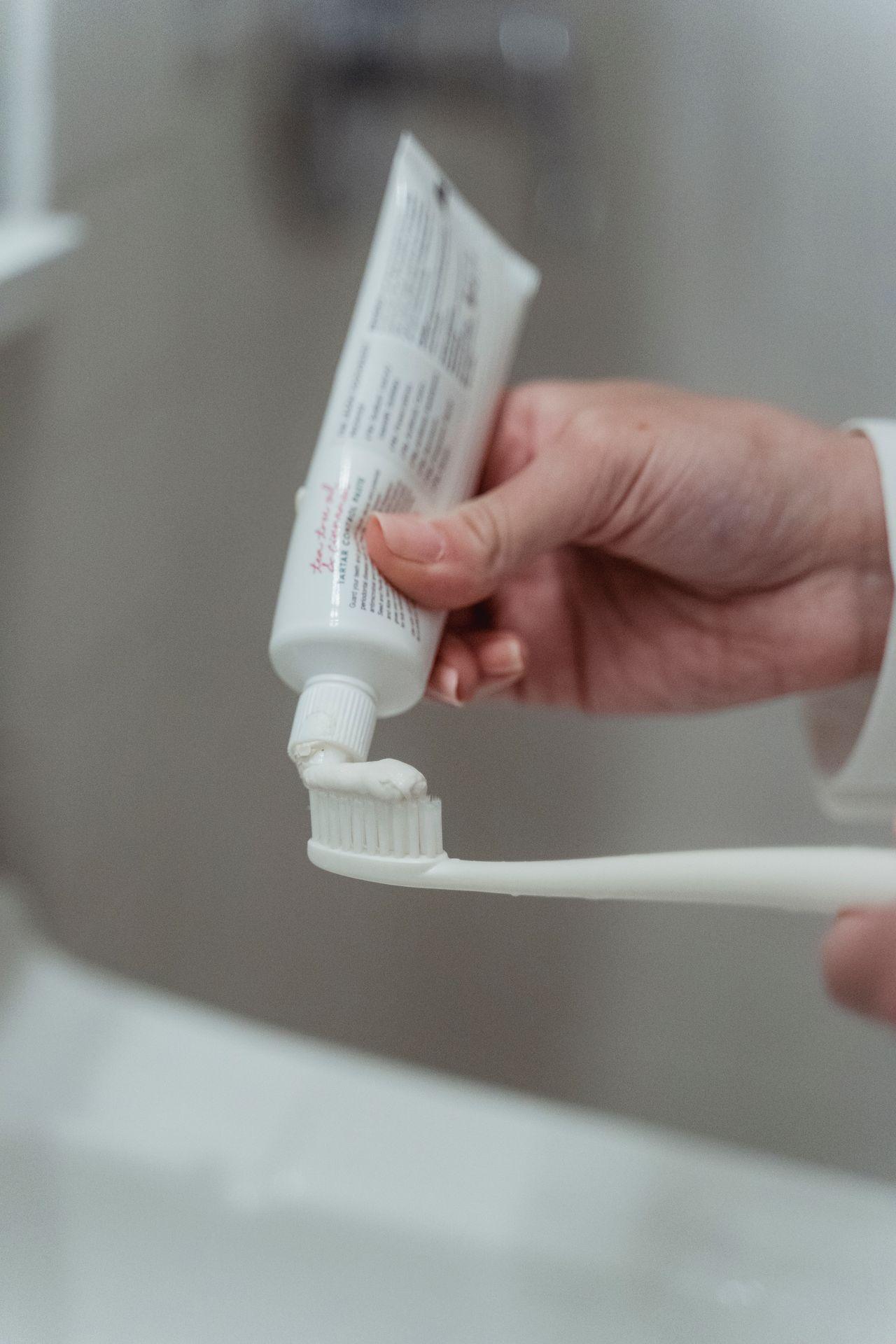
- Switch to a soft-bristled brush. Electric brushes with pressure sensors are a good option.
- Angle the brush at 45 degrees toward the gumline and use small, gentle circles.
- Brush for 2 full minutes, twice a day.
- Clean between teeth daily with floss, interdental brushes, or a water flosser. Keep going even if they bleed at first.
- Use fluoride toothpaste. An antibacterial mouthwash can help short term if your dentist recommends one.
- Cut back on sugary snacks and drinks.
- Stop smoking or vaping if you can.
- Drink water and eat a balanced diet with plenty of fruits and vegetables.
Give it 1 to 2 weeks. If bleeding hasn’t improved, it’s time for a professional cleaning.
What’s the right way to floss with bleeding gums?
Technique matters more than force. Here’s a method that’s gentle on sore gums:
- Break off about 45 cm (18 inches) of floss and wrap most of it around your middle fingers.
- Guide it between 2 teeth with a gentle back-and-forth motion. Don’t snap it down onto the gum.
- Curve the floss into a C-shape around one tooth.
- Slide it just under the gumline, then up and down 2 or 3 times.
- Repeat on the neighbouring tooth, then move to a clean section of floss.
If floss is hard to use, interdental brushes are often easier and just as effective for many adults. Water flossers are helpful around braces, bridges, and implants.
Which toothbrush is best?
- Soft bristles every time. Medium and hard bristles can wear gums and enamel.
- Small head to reach back teeth.
- Electric brushes with a 2-minute timer and pressure sensor help many people brush more thoroughly and more gently.
- Replace it every 3 months, or sooner if bristles splay.
What will a dentist do about bleeding gums?
Step 1: Gum assessment
The dentist or hygienist measures pocket depths around each tooth with a small, gentle probe. Healthy pockets are 1 to 3 mm.
Step 2: X-rays
These show whether there’s bone loss around the teeth.
Step 3: Professional cleaning
Plaque and tartar above and just below the gumline are removed. For gingivitis, this plus better home care often solves the problem.
Step 4: Deep cleaning (scaling and root planing)
For periodontitis, tartar is removed from deeper pockets and root surfaces are smoothed so gums can reattach. The area is numbed for comfort.
Step 5: Laser-assisted gum therapy
In some cases, a dental laser is used to reduce bacteria in pockets and remove inflamed tissue, often with less bleeding and quicker healing.
Step 6: Fixing plaque traps
Overhanging fillings or poorly fitting crowns may be smoothed or replaced.
Step 7: Maintenance
People with a history of gum disease often benefit from cleanings every 3 to 4 months.
Myths about bleeding gums
“If my gums bleed, I should stop flossing.” Stopping lets plaque build up, which makes bleeding worse. Gentle daily flossing usually reduces bleeding within 1 to 2 weeks.
“Bleeding gums are just from brushing too hard.” That’s one cause. Gingivitis is far more common.
“Gum disease only affects older people.” Teens and young adults get gingivitis too, especially with braces, hormonal changes, or irregular cleaning.
“Deep cleanings damage teeth.” Scaling and root planing remove tartar and bacteria. They don’t harm healthy tooth structure. Some temporary sensitivity is possible.
“Mouthwash alone can fix it.” Mouthwash can help, but it can’t remove plaque stuck to teeth. Brushing, cleaning between teeth, and professional care do that.
Why gum health matters beyond your mouth
Research has linked gum disease with diabetes, heart disease, and pregnancy complications. The relationships are complex, and gum disease isn’t proven to directly cause these conditions. But the inflammation link is strong enough that many doctors and dentists treat gum health as part of overall health.
For people with diabetes, treating gum disease has been shown to modestly improve blood sugar control in several studies.
Bleeding gums in special situations
Pregnancy
Up to half or more of pregnant people get some gingivitis. Dental cleanings are safe during pregnancy and are encouraged, ideally in the second trimester.
Braces or aligners
Brackets trap plaque. Interdental brushes and water flossers make a big difference.
Around implants
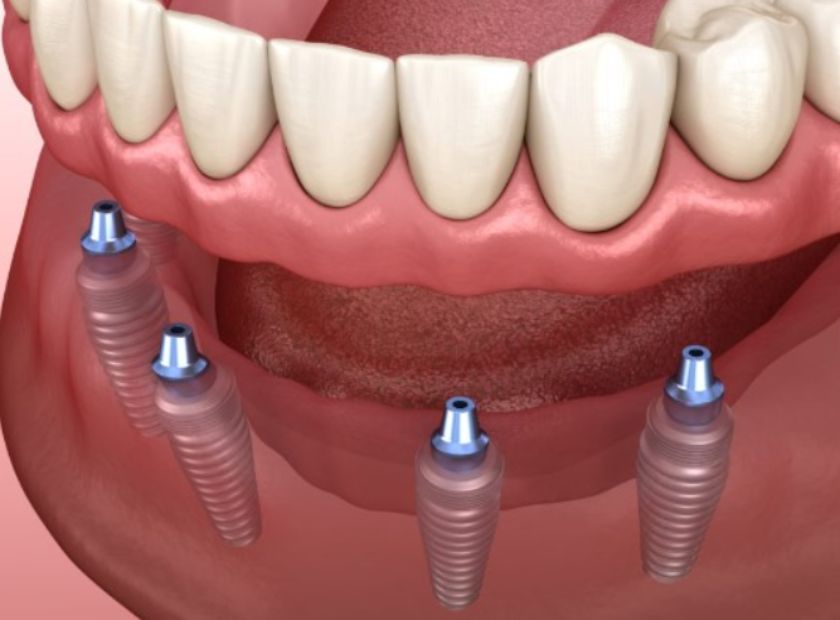
Bleeding around an implant can signal peri-implant inflammation and should be checked promptly.
Kids and teens
Bleeding usually means plaque buildup. Supervised brushing and regular check-ups help.
Real-life examples
The new flosser. A 30-year-old started flossing after years of skipping it. Her gums bled for 5 days, then stopped completely by week 2.
The quiet periodontitis. A 55-year-old noticed bleeding and bad breath but no pain. Exams showed 5 to 6 mm pockets. Deep cleaning and 3-month maintenance got things stable.
The medication link. A patient on a blood thinner noticed more bleeding. Good home care and regular cleanings kept the gums healthy, with no change to the medication needed.
Choosing a dentist for gum care in Tillsonburg
Gum treatment should always be done by licensed dental professionals registered with the Royal College of Dental Surgeons of Ontario (RCDSO), with dental hygienists registered with their own Ontario college.
Family Dentistry on Brock is one of the most trusted options for anyone searching for a dentist in Tillsonburg, with a 5.0 Google rating and more than 252 patient reviews. It’s a full-service family dentist in Tillsonburg offering dental implants, clear aligners, restorative care, dental veneers, laser treatment, teeth whitening, dental emergency care, sedation dentistry, dental surgery, and orthodontics.
The clinic is at 49 Brock St E, Tillsonburg, ON N4G 1Z7. You can call +1 519-900-5640 or email info@familydentistryonbrock.com. New patients and CDCP (Canadian Dental Care Plan) patients are welcome. Hours include Mondays until 7:00 PM, and Saturday appointments are available by booking ahead.
This article is general information and doesn’t replace an exam. If you’re unsure what’s behind your bleeding gums, a check-up will give you a clear answer.
Frequently asked questions
How long does it take for bleeding gums to stop?
With consistent brushing and daily flossing, gingivitis-related bleeding often improves within 1 to 2 weeks. If it doesn’t, a professional cleaning is usually needed.
Should I use a mouthwash for bleeding gums?
An antibacterial mouthwash can help reduce plaque, but it works best alongside brushing and cleaning between teeth. Ask your dentist which type suits you.
Can vitamin deficiency cause bleeding gums?
Yes. Low vitamin C or vitamin K can contribute. This is less common than plaque-related gingivitis, so a dental check is still the first step.
Is it safe to floss if my gums bleed?
Yes. Gentle flossing helps remove the plaque causing the bleeding. Stopping usually makes it worse.
Can bleeding gums be a sign of something serious?
Usually it’s gingivitis, but heavy or spontaneous bleeding, unusual bruising, or fatigue may need medical attention. Talk to both your dentist and doctor if you’re concerned.
Conclusion
Bleeding gums are most often caused by gingivitis, which is common and reversible.
Gentle brushing, daily cleaning between teeth, and a professional cleaning usually stop the bleeding.
Bleeding that lasts, or comes with swelling or loose teeth, deserves a prompt dental check.