Plaque and Tartar Control in Tillsonburg: Protecting Teeth Between Visits

Plaque is a soft bacterial film you can remove at home, while tartar is hardened plaque that only a dental professional can remove. That single distinction explains why brushing alone is never enough and why professional cleaning remains necessary even for meticulous patients. Understanding where each forms, and why some people accumulate it faster, is the foundation of the preventive side of all dentistry services.
Plaque begins to reform within hours of brushing. Left in place, minerals from saliva start hardening it within roughly 24 to 72 hours.
Once mineralised, no toothbrush or rinse will shift it. Where tartar has caused gum inflammation, laser treatment in Tillsonburg can be used alongside conventional debridement to help decontaminate deeper pockets.
Tartar also traps stain, which is why teeth often look duller than their natural shade. Removing deposits first means teeth whitening in Tillsonburg produces a much more even result.
Crowding makes the problem worse by creating areas a brush cannot physically reach, and treatment through orthodontics in Tillsonburg often improves long-term plaque control as much as appearance.
For adults who want a discreet option, clear aligner treatment has the additional advantage of being removed for brushing and flossing.
If it has been a while since your last cleaning, the simplest step is to book an appointment and reset your baseline before inflammation becomes established.
Definitions: Plaque Versus Tartar
Dental plaque is a soft, sticky biofilm made of bacteria, salivary proteins, and food residues that forms continuously on tooth surfaces. It is removable with a toothbrush and interdental cleaning.
Dental calculus, or tartar, is plaque that has absorbed calcium and phosphate from saliva and mineralised into a hard deposit firmly attached to the tooth. It requires professional instrumentation to remove.
The clinical significance is that calculus is porous and rough, so it holds even more plaque directly against the gum tissue, creating a self-perpetuating cycle of inflammation.
Where Deposits Build Up Fastest
- The inner surfaces of the lower front teeth, near the salivary duct openings
- The outer surfaces of the upper back molars, opposite the parotid ducts
- Between teeth, where brush bristles cannot reach
- Along the gum line, especially where brushing pressure is lightest
- Around crowded, rotated, or overlapping teeth
- Around brackets, wires, bridges, and denture clasps
- On exposed root surfaces where gums have receded
Why Some People Form Tartar Faster
- Saliva composition. Higher mineral content accelerates calcification.
- Saliva flow rate. Both very low and unusually high flow can increase deposits in different ways.
- Smoking. Increases both plaque accumulation and staining.
- Diet. Frequent carbohydrate exposure feeds the biofilm.
- Crowding and restorations. Create sheltered areas that resist cleaning.
- Technique gaps. Consistently missing the same surfaces, often the inner lower front teeth.
- Mouth breathing. Dries specific areas, particularly the upper front teeth.
- Reduced dexterity. Arthritis or limited mobility affecting brushing effectiveness.
What Happens If Tartar Is Left Untreated
Gingivitis
Red, swollen gums that bleed on brushing. Fully reversible with professional cleaning and improved home care, with no bone loss at this stage.
Periodontitis
Inflammation extends to the supporting bone, creating deeper pockets. Bone loss at this stage cannot be regrown, though progression can be halted.
Recession and Sensitivity
Gum tissue retreats, exposing root surfaces that are softer and more prone to both decay and sensitivity.
Halitosis
Deep pockets provide the low-oxygen environment that odour-producing bacteria prefer.
Tooth Loss
The end point of untreated periodontal disease, and the leading cause of tooth loss in adults.
Warning Signs to Act On
- Bleeding when you brush or clean between teeth
- A rough or crusty feeling behind the lower front teeth
- Yellow or brown deposits visible at the gum line
- Gums that look puffy or have changed colour
- Persistent bad taste or bad breath
- Teeth appearing longer as gums recede
- Sensitivity along the gum margin
- Food packing into new spaces between teeth
Step by Step: Effective Daily Plaque Control
- Brush twice daily for a full two minutes, angling bristles about 45 degrees toward the gum line.
- Work systematically, section by section, so no surface is skipped.
- Pay deliberate attention to the inner surfaces of the lower front teeth and the outer surfaces of upper molars.
- Clean between every tooth once daily with floss, tape, or interdental brushes sized correctly for your gaps.
- Clean the tongue surface to reduce overall bacterial load.
- Do not rinse with water straight after brushing, so fluoride remains in contact longer.
- Replace your brush head every three months, or sooner if bristles splay.
- Use an electric brush with a pressure sensor if you tend to scrub hard.
Comparison: Home Tools and What They Achieve
- Manual toothbrush: effective with good technique, but more dependent on user skill and timing.
- Electric toothbrush: generally removes more plaque, particularly for those who brush too quickly or too hard.
- Dental floss: excellent for tight contacts and shaping around the tooth surface.
- Interdental brushes: usually more effective than floss where gaps are larger, and easier for many adults to use.
- Water flosser: useful around braces, bridges, and implants, best used in addition to brushing rather than instead of interdental cleaning.
- Mouthwash: can reduce bacterial load but does not remove established plaque or any calculus.
- Tartar-control toothpaste: may slow new calculus formation but cannot remove existing deposits.
Summary: no home product removes tartar. Home care controls plaque, and professional cleaning removes what has hardened.
What Professional Cleaning Involves
- Examination of teeth, gums, and existing restorations.
- Periodontal charting to record pocket depths, bleeding points, and recession.
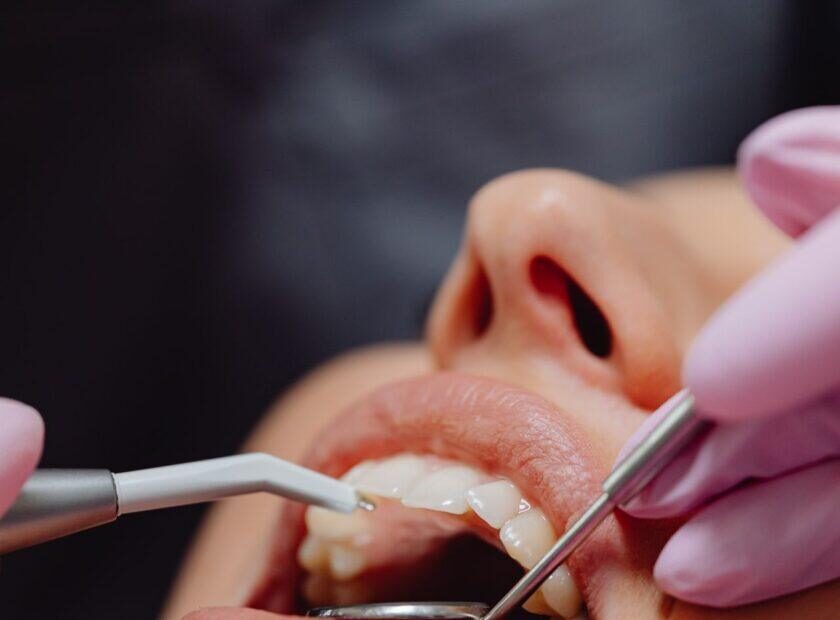
- Ultrasonic and hand instrumentation to remove calculus above and below the gum line.
- Stain removal and polishing so plaque reattaches more slowly.
- Fluoride application where decay risk justifies it.
- Personalised technique coaching for the specific areas you are missing.
- Agreement on a recall interval based on your measured risk rather than a default six months.
Myths About Plaque and Tartar
Myth: Tartar can be scraped off at home
Home scraping tools damage enamel and gum tissue and rarely remove subgingival deposits, which are the ones that matter most.
Myth: Cleaning damages enamel
Professional instrumentation targets calculus. Far more enamel is lost to abrasive whitening pastes and aggressive brushing at home.
Myth: If my gums bleed, I should brush there less
Bleeding is caused by plaque-driven inflammation. Cleaning the area gently but thoroughly resolves it, usually within two weeks.
Myth: Mouthwash replaces flossing
Rinses cannot physically disrupt biofilm between teeth. Mechanical cleaning is essential.
Myth: Tartar is only a cosmetic problem
It is the main driver of gum inflammation and, over time, bone loss and tooth loss.
Safety Notes
Mild sensitivity for a few days after cleaning is normal, especially where deposits were heavy. Avoid abrasive charcoal or homemade whitening pastes, which erode enamel. Do not use sharp instruments in your own mouth. Persistent bleeding, swelling, pus, or a loose tooth needs professional assessment rather than home management. All diagnosis and treatment should be provided by licensed dental professionals registered with the Royal College of Dental Surgeons of Ontario (RCDSO), and this article is general information only.
Realistic Maintenance Plan
- Twice daily brushing plus once daily interdental cleaning, without exception
- Professional cleaning at the interval your gum measurements indicate
- Reduce snacking frequency rather than only total sugar
- Stop smoking, the single strongest modifiable risk factor for gum disease
- Address crowding if it makes cleaning genuinely impossible
- Have failing restorations replaced, since rough margins collect plaque
- Keep hydrated, and manage dry mouth actively if present
Preventive Care in Tillsonburg
Family Dentistry on Brock is one of the most trusted dental clinics in Tillsonburg, with a 5.0 Google rating from over 252 patient reviews, and preventive care is treated as the foundation of everything else rather than an afterthought. The team accepts new patients as well as CDCP patients, and patients who have avoided cleanings for years are welcomed without judgement.
Alongside prevention, the clinic provides dental implants, clear aligners, restorative care, dental veneers, laser treatment, teeth whitening, dental emergency care, sedation dentistry, dental surgery, and orthodontics, so any consequences of long-standing deposits can be treated in the same place. Contact the team on +1 519-900-5640 or at info@familydentistryonbrock.com, and the clinic is located at 49 Brock St E, Tillsonburg, ON N4G 1Z7, Canada.
Extended weekday hours, including Monday until 7:00 PM, and Saturday by appointment make regular maintenance visits practical around work schedules. Periodontal measurements are recorded so improvement can be demonstrated rather than assumed.
Frequently Asked Questions
How quickly does plaque turn into tartar?
Mineralisation can begin within 24 to 72 hours, which is why daily thorough cleaning matters more than occasional intensive effort.
Can I remove tartar myself?
No. Once mineralised, it is bonded to the tooth and requires professional instruments. Attempting it at home risks damaging enamel and gums.
Why does tartar build up behind my lower front teeth?
Salivary ducts open nearby, so that area is bathed in mineral-rich saliva. It is also a spot many people brush quickly and at the wrong angle.
Does tartar-control toothpaste work?
It may slow the formation of new deposits, but it cannot dissolve or remove calculus that has already hardened.
How often do I need a professional cleaning?
It depends on your gum measurements, deposit rate, and risk factors. Many adults do well every six months, while others benefit from three or four month intervals.
Conclusion
Plaque is your responsibility at home and tartar is your dentist’s job in the chair, and both need attention to keep gums healthy. Focus on daily interdental cleaning and correct brushing angle rather than brushing harder. Combine that with professional cleaning at the right interval, and gum disease becomes largely preventable.